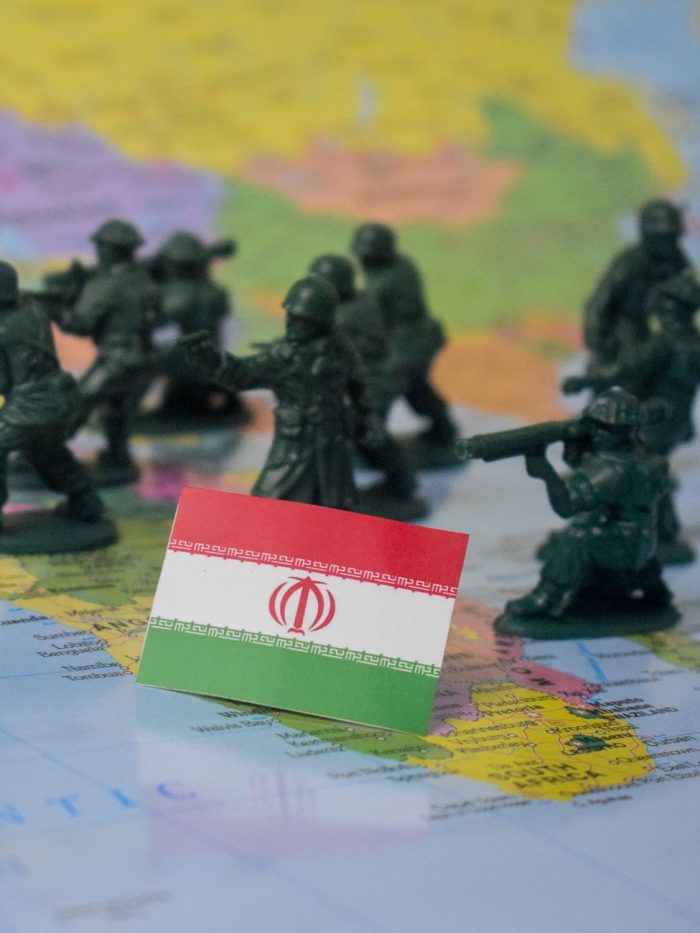
President Donald Trump said in a phone interview with Fox News on Aug. 17 that the United States would bomb Oman if the sultanate interferes with the American naval blockade of Iranian ships in the Strait of Hormuz. “If Oman gets in the way we’ll bomb the s—— out of them,” Trump told the network’s Trey Yingst. He added that the blockade is applying pressure on Iran and that he has no timeline for ending the conflict, stating he is not in a hurry. Trump also called for Iran to “put up the white flag of surrender” and confirmed the existence of a direct backchannel between the US administration and officials of Iran’s Islamic Revolutionary Guard Corps.
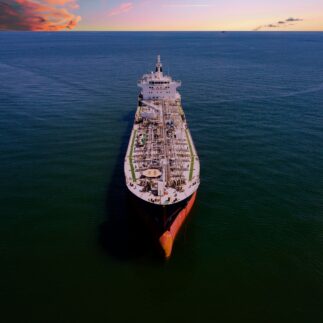
The comments came as Iranian and Omani officials continued talks on maritime navigation arrangements through the strait, which separates the two countries. Iran’s foreign ministry said earlier on Aug. 17 that the sides had reached an understanding on a transit route map and were working on a joint declaration. The strait, which before the war typically carried about one-fifth of the world’s seaborne oil supplies, has seen commercial traffic fall to roughly 7 percent of pre-crisis levels, or about four ship arrivals per day on a seven-day average, according to satellite and tracking data as of Aug. 17. The disruption began on Feb. 28, 2026, the day US and Israeli forces launched strikes on Iran that opened the current conflict.
Trump has previously asserted US control over the waterway despite throttled traffic. On Aug. 14 he said he could declare the strait American territory, a remark a US official later described as a joke. A 60-day memorandum of understanding between the US and Iran, signed in mid-June and providing for temporary toll-free passage, expired around Aug. 17 without a comprehensive agreement. Shipping data from recent days showed as few as zero to five commodity vessels transiting over weekend periods, far below the pre-war average of more than 70 daily arrivals.
In May, Trump had warned that Oman would “behave just like everybody else, or we’ll have to blow them up” in connection with discussions involving the strait. Treasury Secretary Scott Bessent at that time publicly cautioned that the US would aggressively target any actors, including Oman, involved in facilitating tolls or fees for passage, and said he had received assurances from the Omani ambassador that Muscat had no plans for such charges. Brent crude was trading near $89 a barrel on Aug. 17 amid the ongoing restrictions.

While coverage has framed Oman primarily as a longstanding neutral mediator between Washington and Tehran, Iranian statements and earlier reporting document active bilateral talks on defining future administration of the strait after the interim period, including route coordinates that would place inbound traffic nearer Iran and outbound nearer Oman. US officials have repeatedly rejected any arrangement that would allow Iran or joint Iran-Oman mechanisms to impose fees or exert control, with the Treasury Department having sanctioned Iran’s so-called Persian Gulf Strait Authority in May on grounds of links to the Revolutionary Guard. Traffic data and insurance premiums remaining at multiples of normal levels indicate the waterway has not returned to free navigation despite periods of partial reopening earlier in the conflict, contradicting claims of imminent normalization under existing frameworks.
Ship-tracking firms recorded five commodity vessels crossing on one recent Saturday and zero the following Sunday, including an unladen very large crude carrier operating with its automatic identification system offline and an Indian-flagged gas carrier using Iranian waters. Approximately 330 vessels were reported holding position away from berths in the broader region as of mid-August, with war-risk insurance premiums at 30 times normal rates. Oman’s foreign ministry has not issued a public response to the Aug. 17 remarks, consistent with its silence after the May comments. The conflict’s opening phase included the death of Iran’s then-Supreme Leader Ali Khamenei in the initial US-Israeli strikes, after which Iran declared the strait closed to most foreign shipping. Trump separately noted in the Fox interview that the US is speaking directly with Revolutionary Guard officials and described Iran as “good poker players, but they’re dying.”