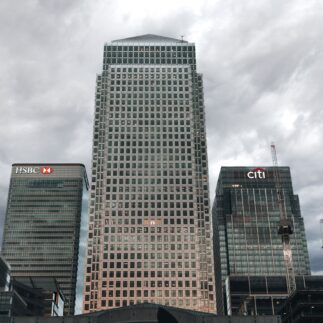
UniCredit SpA advanced its pursuit of Commerzbank AG with a voluntary all-share exchange offer valued at about 35 billion euros, structured as 0.485 UniCredit shares for each Commerzbank share. The Italian lender launched the bid in March 2026 and opened it to shareholders on May 5, aiming to push its holding above the 30% threshold under German takeover rules without immediately securing full control. By the end of the additional acceptance period on July 3, shares representing 17.6% of Commerzbank’s capital had been tendered. Combined with UniCredit’s preexisting 26.77% direct stake and 3.22% in share-settled derivatives, the position reached 47.59% of capital, equivalent to 49.65% of voting rights once treasury shares are excluded.
Transfer of the tendered shares remains subject to regulatory approvals. An internal European Central Bank document dated around mid-August found no grounds to object on prudential grounds, though it flagged a challenging and long-lasting integration and called for mitigation strategies to build support inside Commerzbank plus stronger checks at UniCredit. A final ECB review is expected in September or October. Germany’s BaFin has raised governance concerns about UniCredit’s approach but forwarded the application as complete.
On Aug. 17, senior German government officials indicated openness to discussing a sale of the state’s 12.7% Commerzbank holding to UniCredit if the two banks first agree on a joint strategy, according to people familiar with the matter. The position is not formal policy, yet some officials view a transaction at the right price with safeguards for Commerzbank’s future as acceptable given UniCredit’s likely path to control. Germany acquired the stake during the 2008-2009 financial-crisis bailout and has long backed Commerzbank’s independence, formally rejecting the offer in June as lacking an adequate premium and describing UniCredit’s approach as aggressive.
Commerzbank’s management and supervisory board recommended against accepting the offer, citing insufficient premium relative to market prices and long-term value, potential risks including job cuts of up to 11,000, and exposure to UniCredit’s Italian sovereign holdings and Russia-related business. The German bank has posted record results in the first half of 2026 and remains open to constructive dialogue involving management, employees and the federal government. Chancellor Friedrich Merz has stated that Berlin is not blocking a takeover but disapproves of the confrontational manner in which it was pursued. UniCredit Chief Executive Officer Andrea Orcel has said the offer removes the need to continually adjust the stake below 30% and creates flexibility for further market purchases once regulatory processes conclude, with a full combination potentially possible in the fourth quarter of 2026.

While mainstream accounts have portrayed the bid as a low-premium hostile move unlikely to attract broad institutional support, UniCredit’s final tender result of 17.6% exceeded many early expectations and, when combined with existing holdings and derivatives, produced an effective voting position near 50%. Commerzbank data indicated that only 2.7% of independent institutional and retail investors tendered, with much of the acceptance linked to banks and parties connected to UniCredit that held limited prior stakes; the German bank shared these findings with BaFin and questioned the economic rationale given that its shares traded above the implied offer price for most of the period. The ECB’s preliminary stance of no material grounds for objection contrasts with persistent political and supervisory friction in Germany, where BaFin has highlighted aggressive and partially intransparent behavior and the need for stronger internal controls at UniCredit.
UniCredit first disclosed a stake in September 2024 after purchasing a 4.5% block sold by the German government via its finance agency, which had hired JPMorgan to manage the process; that tranche helped lift UniCredit’s holding to 9% and set the stage for subsequent accumulation via shares and derivatives. Crossing 30% triggered the mandatory-offer mechanics that UniCredit structured the 35-billion-euro bid to navigate, allowing it later to buy additional shares on the open market without a new full bid. The offer document projected potential annual pre-tax value of 1.1 billion euros from corporate-center savings and IT optimization if a combination proceeds. Commerzbank has committed to cancel treasury shares, which would further concentrate UniCredit’s voting percentage. Frankfurt prosecutors opened a preliminary investigation into possible market manipulation related to the offer after a complaint from Commerzbank’s workers’ council, though no details or outcomes have been disclosed.