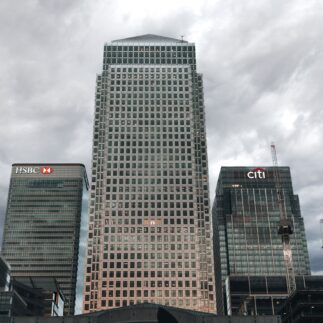
Deutsche Bank shares fell by as much as 6.4% in Frankfurt on Tuesday after a consortium of more than 50 media outlets began publishing reports drawn from a leaked trove of internal files, reviving questions about the lender’s dealings with Jeffrey Epstein, Russian oligarchs and clients linked to Donald Trump.
The project, called “Inside Deutsche Bank,” rests on about 15.6 million files, including emails, meeting minutes, internal risk reports and transaction records dating back to the early 2010s. More than 200 journalists worked on it. The material came from two unidentified whistleblowers and was passed to reporters through South African and Indian journalists.
On Epstein, the reports say the bank filed suspicious activity reports in 2019 that identified $582 million of transfers tied to the financier, more than twice the amount disclosed earlier in a U.S. Senate inquiry. Another account puts the figure at nearly $580 million between 2013 and 2019. On Russia, the files show that senior management planned a 2020 expansion there even though compliance staff and monitors appointed by the U.S. Justice Department had raised concerns. Chief Executive Christian Sewing was among the participants in the working group that developed the strategy.
A third strand concerns Trump. A relationship manager inadvertently sent the year-end tax statements of 1,586 accounts, his among them, to a client’s accountant.
The bank’s reply was that the issues are old. Chief Financial Officer Raja Akram said the stories repeat headlines that have circulated for years and that, given the legacy nature of the matters, earlier press coverage and past discussions with regulators, the bank expects no meaningful financial impact, if any. The bank described itself as a “different bank” after major reforms. Sewing said in an interview that he did not expect significant financial consequences, such as from lawsuits, because many of the issues had been dealt with, adding that he was “not without mistakes.”
German Finance Minister Lars Klingbeil, who is also vice chancellor, urged the bank to provide “full transparency” on how it has addressed past failures and control deficiencies and how it will prevent them in future. He said independent regulators and law enforcement now have the job of examining the leaks.
The size of the share reaction differs by report: some put the intraday drop at almost 6%, others at around 4% in Frankfurt. None of the reports gives a closing price.
Much of the Epstein material is not new. The bank held more than 40 accounts for Epstein and his entities between 2013 and 2018, and it has already paid $225 million in fines and settlements tied to the relationship. German prosecutors have been examining whether suspicious activity reports were filed late. The stock fell 1.86% on the day that investigation became public in January.

Russia remains a live exposure. The bank’s announced withdrawal from the country is incomplete: as of last year it still employed 162 people there, and its local subsidiary earned a pre-tax profit of €61 million ($67 million). The files reportedly show it courted oligarchs and sought to expand shortly before Russia’s 2022 invasion of Ukraine, despite internal warnings about regulatory and money-laundering risks.
An earlier leak, the FinCEN Files in 2020, also hit the stock, which dropped 8.3% on the day those reports emerged.
Sources: Bloomberg, Yahoo Finance, business-standard.com.