The risk of fresh U.S. strikes on Iran is rising as the two sides trade blows around the Gulf and negotiations remain stuck, with western officials saying President Donald Trump has not yet decided on new action. Brent crude edged up to about $92.60 a barrel on Thursday, Nov. 19, and European gas prices rose about 3% in early trading.
The latest round of skirmishes centered on Qeshm Island in the Strait of Hormuz. On Tuesday, Nov. 17, a U.S. military official confirmed precision strikes on an Islamic Revolutionary Guard Corps missile site there, describing them as self-defense after Iranian aggression against American personnel and assets. A Hormozgan provincial official said the attacks caused no damage to residential, commercial or infrastructure sites. The U.S. described the Qeshm strike as a response to the third attempted Iranian strike on a U.S. installation in five days; all were intercepted.
Iran has hit or claimed to hit U.S. facilities in Bahrain and Kuwait several times over the past week. Tehran said it launched drones at a U.S. radar at a Bahraini air base on Nov. 13, Nov. 15 and Nov. 17. U.S. Central Command said the drones launched on Nov. 17 were all intercepted, with no damage or injuries, and called the claimed hit false. Kuwait’s army reported responding to hostile drone attacks the same day.
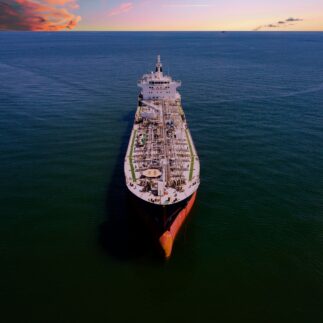
Shipping remains in the line of fire. Iran’s navy said several tankers struck mines in the eastern strait over a 24-hour stretch to Nov. 17, and the IRGC Navy called the southern route a minefield. The U.S. says the southern lanes are cleared and safe. Iranian strikes are landing on roughly one vessel a day on average, which keeps freight and insurance costs elevated, and the U.S. Navy is stretched between enforcing its blockade of Iran and escorting commercial ships. At least two U.S. aircraft carrier strike groups are in the region.
Diplomacy has produced little. Qatar, the main mediator, said on Nov. 17 that talks were continuing but that escalation on the ground posed an extremely grave danger to a deal. Qatari officials met Iranian Foreign Minister Abbas Araghchi in Oman this week without a breakthrough, and Araghchi held separate talks in Muscat with his Omani counterpart on the future management of Hormuz. Iran is demanding an end to the U.S. naval blockade, relief from some sanctions and the unfreezing of assets before it negotiates. Washington has not accepted those terms.
Oil traders have so far looked past the escalation. Brent is down from about $117 just before the U.S. midterm elections, though it remains up more than 50% this calendar year, largely because of the war. Brent was near $72 in late February, before the conflict began.

Several data points cut against the alarm. Gulf exports recovered much faster than global oil demand in the week of Nov. 9 to 13, and more Arab-state crude is moving through the strait. Iraq resumed pipeline exports to Turkey at 120,000 barrels a day, with a planned ramp to 500,000 barrels a day. Trump said after meeting Qatar’s prime minister that the war could end fairly soon and was militarily effectively over.
Less noticed is the Saudi angle. The Houthis claimed drone strikes on pumping stations 8 and 9 of Saudi Arabia’s East-West pipeline on Nov. 17; the line has a capacity of 7 million barrels a day and is the main bypass around Hormuz. Saudi authorities said they shot down a Houthi drone near Riyadh the same day. Separately, Prime Minister Benjamin Netanyahu is reportedly pressing for a joint four-to-seven-day airstrike campaign against Iran.
Sources: cbsnews.com, CNBC, military.com, Bloomberg.