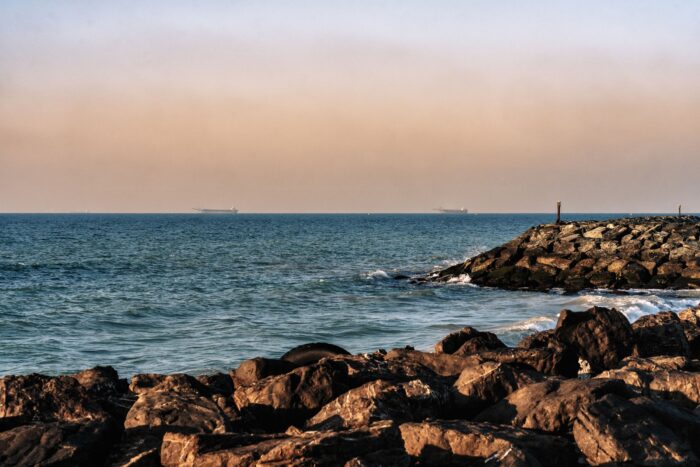
The U.S. military carried out limited strikes on Iran’s Qeshm Island in the Strait of Hormuz on Monday, the eve of the U.S. midterm elections, while Qatari mediators wait for Washington and Tehran to answer a revised draft deal. A U.S. official described the action as defensive, aimed at surface-to-air missile launchers used against American aircraft, and another said it did not signal a return to major combat.
Iranian state media reported five explosions on Qeshm and further blasts at Bandar Lengeh. The Revolutionary Guards said they shot down a U.S. MQ-9 drone and two smaller drones near the strait. The U.S. military has not confirmed those claims.
A Qatari delegation spent more than three hours in Tehran on Monday on a version of the draft agreement that has been under discussion for eight days, and Qatar’s foreign ministry spokesman, Majed al-Ansari, said both sides are reviewing the mediators’ proposals. “If there were no glimmer of hope, there would be no negotiations,” he said. An official briefed on the talks said replies were expected within 36 hours, though a senior Iranian official later said there was no deadline for exchanging messages.
Tehran has given no ground in public. The senior Iranian official said the two sides are “still far” from a deal and that Iran would not accept “excessive demands.” Mohsen Rezaei, secretary of the Supreme National Security Council, called the latest U.S. response “not convincing” and said Washington must address Iran’s seven conditions before the strait reopens. Those include waiving oil sanctions, ending the U.S. naval blockade and releasing frozen Iranian funds. Nuclear talks, the official said, could begin only after the conditions are met. Parliament Speaker Mohammad Baqer Qalibaf, Iran’s lead negotiator, said the “ball is in America’s court to prevent war.”
Washington’s signals have been mixed. Vice President JD Vance said on Monday that the U.S. had made progress in indirect negotiations and that he was optimistic about a settlement, and President Donald Trump said a deal “could happen.” Trump said in a television interview on Tuesday that he is not looking to kill many people but added, “If we have to, we’ll have to.” Secretary of State Marco Rubio has said no decision has been made on renewed strikes. Trump had earlier said the U.S. would not attack Iran before the midterms.
The military track continues in parallel. Armed forces chief Ali Abdollahi has said Iran is updating target lists that include U.S. and Israeli assets, and Supreme Leader Mojtaba Khamenei ordered forces last week to respond immediately and “without geographic limits” to any attack. Hardline Iranian media have named U.S. facilities in Britain, Italy, Greece, Romania, Albania and Cyprus as possible targets if the war resumes. The war began on Feb. 28 when the U.S. and Israel attacked Iran.
Oil has reacted more to diplomacy than to the strikes. Brent fell 7.6% on Monday to settle at $104.77 on hopes of a breakthrough, then rose in Asian trading on Tuesday despite the Qeshm action.

Gulf governments are bracing for the outcome. The United Arab Emirates’ diplomatic adviser, Anwar Gargash, said the country hopes for a breakthrough but is “braced for the worst,” and Egypt’s foreign minister, Badr Abdelatty, warned that another escalation would be more destructive. Houthi attacks on Saudi Arabia have intensified, and Saudi Defense Minister Prince Khalid bin Salman discussed them with U.S. Defense Secretary Pete Hegseth.
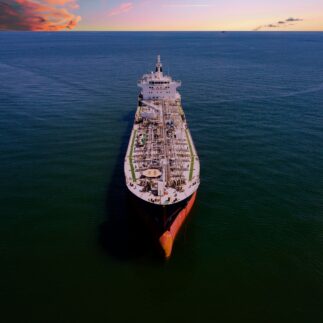
Shipping remains exposed. A Qatari liquefied natural gas carrier was struck by unidentified objects on Friday, drawing condemnation from Gulf states, and Qatar has said freedom of navigation in the strait is non-negotiable. Iranian Foreign Minister Abbas Araghchi has said a revised mediated proposal could allow the strait to reopen within two days if Washington accepts Iran’s conditions.
Sources: theglobeandmail.com, gulfnews.com, Al Jazeera, euronews.com, Bloomberg.