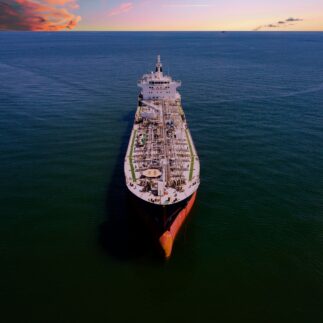
U.S. Treasury Secretary Scott Bessent stated on Aug. 13 that the United States will apply measures never before seen in the history of economic isolation against Iran, with further announcements expected the following week. Speaking in an interview on Newsmax’s “Rob Schmitt Tonight,” Bessent said the steps would combine economic isolation on a scale the world has never seen with the continued blockade in the Strait of Hormuz that prevents vessels from entering or leaving Iranian ports. Defense Secretary Pete Hegseth separately indicated the U.S. Navy can sustain the blockade indefinitely through ship rotations.
The comments came amid the Trump administration’s intensified focus on financial pressure after nearly six months of conflict that began with U.S. and Israeli strikes in late February 2026. Bessent has overseen Operation Economic Fury, described by administration officials as the financial equivalent of a sustained bombing campaign, involving expanded sanctions on shipping, financial networks, secondary sanctions threats, and asset freezes. Vice President JD Vance said the administration’s top priority is ensuring energy price stability for Americans by keeping Gulf oil and gas flowing, with preventing Iran from obtaining a nuclear weapon ranked second.
Iran’s economy has faced sharp contraction in oil revenues under the port blockade, which has repeatedly driven crude loadings near zero in periods of strict enforcement, according to tracking data from firms such as Kpler and TankerTrackers. Pre-conflict exports had run around 1.5 million to more than 2 million barrels per day. Year-on-year consumer price inflation reached approximately 77% to 88% in recent official readings from Iran’s Statistical Centre and Central Bank, with food categories posting triple-digit increases in earlier months. The rial has depreciated substantially from pre-war levels, at times trading near or above 1.8 million to 1.9 million per dollar on parallel markets. Shipping transits through the Strait of Hormuz, which carried roughly one-fifth of global oil and LNG volumes before the conflict, have averaged far below the pre-war pace of around 100 vessels per day, with recent daily commodity vessel counts near 9 to 12.
Bessent’s Aug. 13 remarks followed earlier administration statements that the combination of sanctions and the blockade has restricted Iran’s ability to generate and move hard currency, freeze offshore assets, and limit payments to security forces. The Treasury has previously reported seizures of Iranian-linked cryptocurrency holdings totaling hundreds of millions to about $1 billion in earlier phases of the campaign. Secondary sanctions warnings have targeted financial institutions in China, Hong Kong, the UAE, and Oman over Iranian-related activity.

Prevailing coverage frames the coming measures and blockade as likely to force rapid regime capitulation through economic collapse. Yet Iran has previously absorbed multi-year maximum-pressure sanctions campaigns without altering core nuclear or regional policies, and official data show continued, if intermittent, crude movements to China via shadow fleet vessels even under restrictions. Inflation, while elevated at 77% to 88% year-on-year, has not reached the triple-digit sustained rates claimed in some earlier official U.S. commentary, and temporary export surges of tens of millions of barrels have occurred during periods of relaxed enforcement. The Strait of Hormuz remains a leverage point for Tehran, with traffic continuing at reduced levels under competing control claims and occasional vessel incidents reported by operators such as ADNOC. Regime officials have signaled pursuit of alternative financing channels, including closer BRICS New Development Bank ties.
Operation Economic Fury, launched under presidential direction earlier in 2026 and intensified around April, has included systematic targeting of Iran’s full oil supply chain stages, shadow banking networks, and IRGC-linked remittances, with Treasury coordinating across agencies to track and freeze offshore holdings designated for eventual allocation to the Iranian population. Earlier phases produced bank failures and dollar shortages that U.S. officials linked to December 2025–January 2026 protests. Kharg Island, handling the bulk of pre-conflict exports, has faced repeated operational interruptions from both strikes and the blockade. Shipping data indicate that residual transits often rely on Iranian-controlled northern corridors or dark AIS periods, while non-oil trade has shifted partially to overland routes through neighboring states. Historical maximum-pressure efforts from the prior Trump term similarly reduced but never fully eliminated oil revenues, leaving residual flows that sustained core state functions.