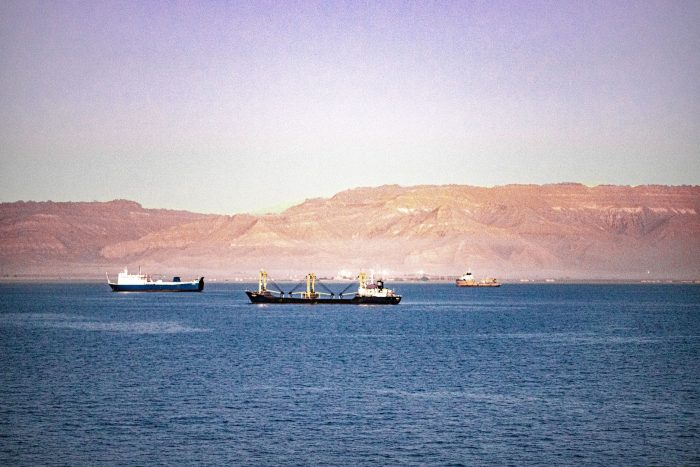
The United States, Iran and Oman are closing in on an interim agreement to reopen the Strait of Hormuz under a 60-day temporary arrangement that could be extended, with Washington targeting a Wednesday announcement, according to two regional sources and a U.S. official cited by Axios. Under the emerging outline, all inbound vessels entering the Persian Gulf would transit a northern lane through Iranian territorial waters while outbound traffic heading to the Arabian Sea would use a southern lane through Omani waters in coordination with Iran. No tolls or fees would apply during the initial period.
The parties would clear naval mines from the median lane within 30 days, after which that lane would support two-way traffic under a permanent arrangement negotiated solely between Oman and Iran. Iranian Foreign Minister Abbas Araghchi accepted the broad terms over the weekend, with approval from Supreme Leader Mojtaba Khamenei and the Supreme National Security Council completed on Tuesday. U.S. envoy Steve Witkoff held calls with Araghchi and Omani Foreign Minister Badr al-Busaidi in recent days.
The framework would restore the ceasefire that collapsed last month following the breakdown of the June memorandum of understanding and create space for renewed nuclear discussions. Pre-war, the strait operated as an open international waterway under the United Nations Convention on the Law of the Sea with no designated national lanes or required coordination with Iran. The draft meets Iranian demands for greater control over traffic that Tehran did not possess before the February 2026 outbreak of hostilities.
Iranian officials have described talks as focused exclusively on Oman and aimed at arrangements where Iran is dominant for one to three months, with security, demining and maritime services handled by Tehran. A senior Iranian source told Reuters the text on the table already envisions Iranian control of inbound shipping, with the remaining sticking point being the extent of Iranian oversight on outbound vessels.

While the prospect of reopening has driven oil-price declines and market optimism for de-escalation, the structure embeds Iranian coordination and lane designations that exceed the pre-war status of unrestricted transit. A U.S. official has stated that temporary routes would involve neither Iranian approvals nor permissions and no tolls, yet Iranian accounts and regional sources describe control over inbound traffic and notification requirements for outbound vessels. A senior Gulf official assessed the odds of a deal by Friday at roughly 50-50, citing the absence of Islamic Revolutionary Guard Corps representatives in the Iranian delegation whose sign-off would be required. Shipping data continue to show daily transits in the single digits against the pre-war average of 130 to 140 vessels.
Iranian negotiators have sought service fees of 5 to 7 percent of cargo value while Oman has discussed levels near 3 percent; Washington has insisted on none, with voluntary contributions modeled on the Strait of Malacca remaining under discussion as a potential compromise. The June memorandum’s Article 5 had already required Iran to conduct dialogue with Oman on future administration of the strait while providing for 60 days of charge-free passage, language Tehran interpreted as affirming its central role. An earlier Omani proposal for equal 50-50 route division and regional joint management was rejected by Iran as insufficient to address its security concerns. Once the median lane is cleared, the permanent Iran-Oman arrangement would supersede the temporary dual-lane system without further U.S. participation specified in the draft.