
WTI crude oil’s rise above $70 per barrel is fueled by heightened geopolitical tensions between Russia and Ukraine. The escalation, including missile exchanges, has introduced a risk premium that could sustain price levels despite broader demand concerns. Markets are also focusing on the upcoming OPEC+ meeting, where potential delays in output increases could further tighten supply expectations.
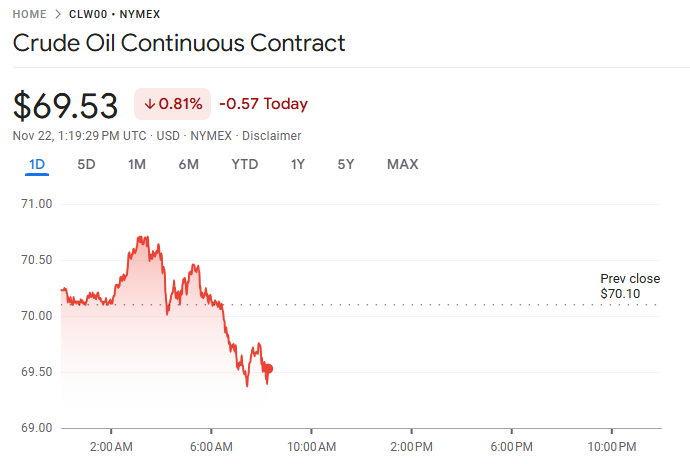
While geopolitical tensions support crude prices, rising U.S. crude inventories and China’s weak economic recovery act as headwinds. U.S. crude stockpiles increased by 545,000 barrels, aligning with expectations of a potential surplus in 2024 due to record-high production and weakening demand from major importers like China. This mixed outlook underscores the importance of monitoring OPEC+ decisions and China’s economic data for near-term price direction.
U.S. natural gas prices spiked to $4.3/MMBtu, driven by colder-than-expected weather forecasts and an early start to the storage withdrawal season. The unexpected 3 bcf draw in gas storage, compared to an expected build, underscores supply tightness exacerbated by rising LNG exports to Europe. Colder temperatures across most of the U.S., excluding the Gulf Coast, are expected to sustain heating demand, supporting prices in the short term.
Gasoline prices rose to a two-week high of $2.05 per gallon, supported by API’s report of a 2.48-million-barrel inventory decline, though EIA data showed a build that eased supply concerns. Similarly, heating oil futures climbed to $2.26 per gallon amid geopolitical risks and forecasts for cooler weather boosting heating demand. Rising heating oil stocks, with a 342,000-barrel build reported by the EIA, partially offset the upward pressure.
Strategic Implications:
The geopolitical risk premium presents an opportunity for tactical exposure to crude oil, particularly ahead of the OPEC+ meeting on December 1st. However, given the potential for supply increases and China’s weak demand outlook, a balanced approach with downside protection is advisable. Hedging strategies or selective exposure to oil-related equities with strong cash flows may provide resilience.
The sharp rise in natural gas prices, driven by colder weather and storage dynamics, offers a favorable short-term outlook. Selective exposure to natural gas or companies involved in LNG exports could capture near-term upside. However, monitoring production trends and updated weather forecasts is essential to manage potential volatility.
Tightening heating oil supplies and cooler weather forecasts support a constructive view on heating oil in the near term. For gasoline, while current inventory builds ease immediate concerns, geopolitical risks and the potential for crude price volatility warrant caution. Selective positioning in refined products may provide opportunities as seasonal demand trends evolve.
The escalation of Russia-Ukraine tensions and the upcoming OPEC+ meeting are critical to shaping energy market dynamics. Any indication of further supply disruptions or OPEC+ production delays could sustain elevated crude prices, while resolutions could ease geopolitical pressures and weigh on energy markets.
Enjoyed this article? Access highly trusted educational content and market research by investing in a membership.








