
Given the current market behavior, our perspective focuses on the implications of sector rotation, policy developments, and macroeconomic data on portfolio positioning.
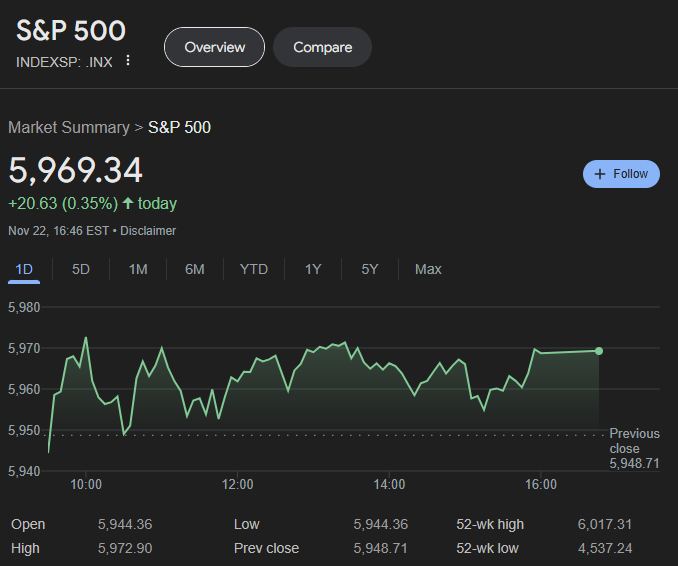
The S&P 500 and Dow Jones rose on Friday, supported by investor rotation from technology into economically sensitive sectors like financials, industrials, and consumer discretionary. The Nasdaq lagged due to declines in major tech stocks like Nvidia (-3.2%) and Alphabet (-1.7%), reflecting a shift in market sentiment toward value-oriented or cyclical names amid stronger economic data. Tesla’s 3.8% gain highlights selective strength within megacaps, particularly in growth-oriented subsectors.
The dollar index (DXY) climbed to a two-year high above 107.5, driven by weakness in the euro and other major currencies following contractionary PMI data from the Eurozone, Japan, and the UK. In contrast, the U.S. economy demonstrated resilience, with a strong S&P Global Composite PMI (55.3) signaling robust private sector activity. The dollar’s strength underscores the divergence between the U.S. and other global economies, posing potential headwinds for U.S. multinationals reliant on exports or foreign revenue.
Treasury yields settled at 4.42%, reflecting market recalibration of Fed rate cut expectations amid stronger-than-expected U.S. economic data. The probability of a 25-bps rate cut in December fell to 55%, down from earlier levels. Trump’s expected policy agenda—focused on tariffs, immigration, and tax changes—has fueled inflationary expectations, potentially limiting the Fed’s ability to ease monetary policy aggressively.
Markets await Trump’s pick for Treasury Secretary, which could shape fiscal and trade policies. This decision, along with recent geopolitical tensions between Russia and Ukraine, adds a layer of uncertainty to the macroeconomic backdrop. Pam Bondi’s appointment as U.S. Attorney General also reflects the administration’s focus on consolidating policy leadership.
Strategic Implications:
The rotation into cyclical sectors highlights the need for balanced equity exposure. Increasing allocations to financials, industrials, and consumer discretionary sectors may provide upside amid improving economic data. Caution is warranted in technology stocks, where elevated valuations and rising yields could pressure performance. However, selective exposure to high-growth, high-margin tech names like Tesla may still offer opportunities.

With Treasury yields stabilizing and rate cut expectations softening, a focus on short-to-medium-duration bonds is advisable to manage duration risk. Inflation-protected securities (TIPS) could also serve as a hedge against potential inflationary pressures driven by fiscal policies under a Trump administration.
The dollar’s strength, while signaling confidence in U.S. economic outperformance, poses challenges for companies with significant foreign revenue exposure. Currency hedging strategies may help mitigate these risks. For international allocations, selective exposure to regions or sectors less sensitive to dollar strength is recommended.
Trump’s pick for Treasury Secretary and further fiscal policy details will be critical to shaping sector and market expectations. Additionally, monitoring Fed commentary and upcoming inflation and labor data will help refine rate outlooks and guide asset allocation decisions.
Like this article? Enjoy trusted educational content and prime market research by investing in a membership to become part of our community.








