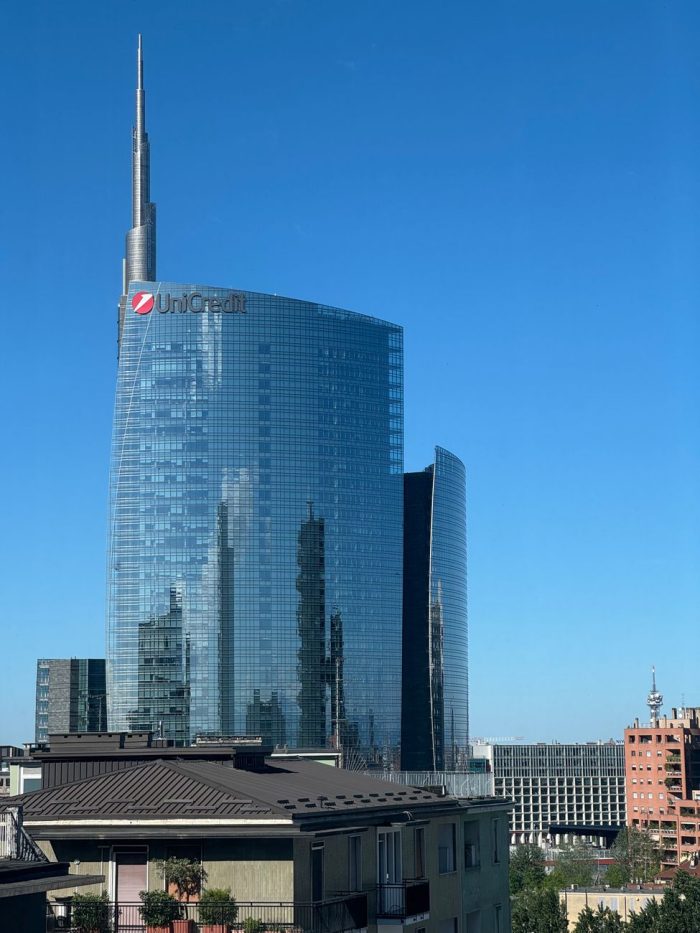
UniCredit SpA Chief Executive Andrea Orcel and Commerzbank AG Chief Executive Bettina Orlopp held a telephone discussion on Friday centered on the accounting, legal and risk implications that will arise when the European Central Bank treats Commerzbank as a UniCredit subsidiary and requires regulatory consolidation. The call marked an early formal exchange after UniCredit secured a stake of approximately 48% in the German bank through its tender offer.
UniCredit’s holding reached 47.59% of Commerzbank’s share capital following the close of its voluntary exchange offer, corresponding to about 49.65% of voting rights once treasury shares are accounted for. The Italian bank had previously held roughly 27% and used the offer to cross key thresholds. Germany’s BaFin has deemed UniCredit’s application to exceed the 30% ownership threshold complete and forwarded it to the ECB, which has a 60-working-day window to decide on the control question. UniCredit expects the ECB to conclude that its influence equates to effective control, triggering consolidation of Commerzbank’s assets onto UniCredit’s balance sheet and a corresponding reduction in the Italian bank’s regulatory capital ratios.
Orlopp stated during Commerzbank’s second-quarter results presentation that the banks had initiated discussions in the concrete interest of both sides and that a joint approach could create value. She expressed optimism that common ground could be found step by step on governance and the business model. UniCredit has indicated it plans to manage Commerzbank as a separate entity for at least two years after gaining control before any potential full merger with its German subsidiary HypoVereinsbank. The German government retains a residual stake of about 12%, and employee representatives hold half the seats on Commerzbank’s supervisory board.
While the conversation is described as addressing practical consequences of an anticipated ECB control decision rather than the start of full merger negotiations, a source close to UniCredit characterized an earlier brief meeting between the CEOs as limited to necessary accounting and consolidation steps. UniCredit has maintained openness to direct engagement with the German government, worker representatives and the governing bodies of Commerzbank’s Polish unit mBank. Commerzbank has emphasized that meaningful synergies within a reasonable timeframe would require a consensual solution involving its management, employees and the German government. The ECB decision remains subject to potential extensions if further information is requested, and additional clearances are still needed from EU antitrust authorities, the US Federal Reserve, Germany’s foreign investment review and Polish regulators.

Under minority holding rules, consolidating Commerzbank without a majority stake would have increased UniCredit’s core capital requirements by about 40%. The tender offer take-up of 17.6% of share capital exceeded initial market expectations for an offer that carried only a modest premium. UniCredit has outlined plans for cost reductions at Commerzbank that could involve up to 7,000 positions in trade finance, back-office and senior management while focusing the bank on its core German and Polish markets. Commerzbank reported a 94% rise in second-quarter net profit to €898 million and plans a share buyback of up to €1.2 billion after receiving regulatory approval.