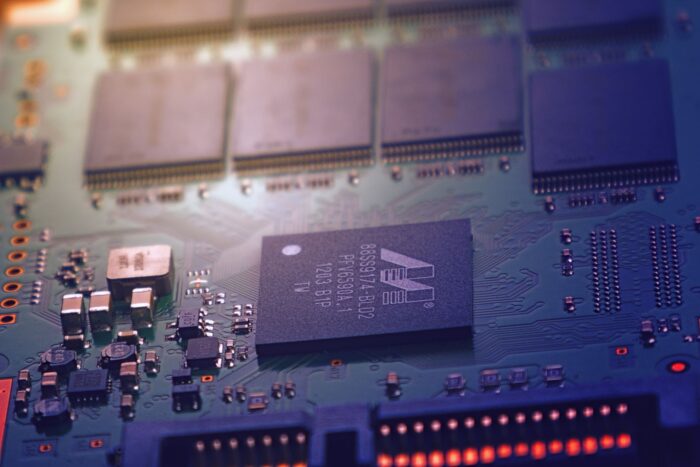
Micron Technology delivered one of the most commanding quarterly performances in semiconductor history, posting fiscal third-quarter revenue of $41.46 billion that more than quadrupled from a year earlier and handily topped expectations. The memory specialist also guided fourth-quarter sales near $50 billion at margins approaching 86 percent, triggering an immediate double-digit surge in after-hours trading and reviving sentiment across the broader technology complex.
The results arrive at a pivotal moment. Markets had absorbed a sharp midweek pullback in leading technology names amid concerns over AI talent competition and valuation stretches. Micron’s blowout print, however, reframed the narrative around sustained hyperscaler demand for advanced memory solutions essential to scaling large language models and inference workloads. High-bandwidth memory in particular remains the binding constraint in the AI infrastructure stack, with pricing power and sold-out capacity extending visibility well into next year.
Core data-center and cloud memory segments drove the acceleration. These units generated outsized contributions with gross margins in the mid-to-high 80s percent range, reflecting both volume expansion and elevated average selling prices for premium products. Broader business units in mobile, client, automotive, and embedded also posted strong sequential gains, demonstrating balanced demand across end markets even as AI dominates the growth story. Operating cash flow reached $25.39 billion, underscoring the capital-conversion efficiency at current pricing levels.
Micron has moved aggressively into next-generation high-bandwidth memory. HBM4, built on advanced process technology, entered high-volume shipments for lead customer platforms, with qualification samples dispatched to additional hyperscalers and accelerator designers. Development of HBM4E is already advancing toward 2027 volume production. The company has executed transformative strategic customer agreements that lock in pricing and volumes, shifting revenue predictability away from the spot-market volatility that once defined the memory industry.
This contractual backbone represents a material departure from historical cycles. Hyperscalers continue committing capital at unprecedented scale, with memory now commanding a far larger share of data-center build budgets than in prior generations of compute infrastructure. The result is a self-reinforcing dynamic: insatiable demand for bandwidth and capacity density keeps supply tight, supporting margins that would have seemed implausible even two years ago.
Today’s release of May personal consumption expenditures data will test whether energy-price relief from the recent Middle East de-escalation can meaningfully temper core inflation readings. Any softening in the Fed’s preferred gauge could reinforce expectations for measured policy adjustments and sustain risk appetite. Micron’s performance, however, highlights that AI-driven capital expenditure operates with its own momentum, less directly tethered to near-term monetary conditions than cyclical sectors of the past.
The dominant narrative frames Micron’s surge as validation of a new secular upcycle in which artificial intelligence permanently retires the memory industry’s boom-bust pattern. Yet this view underweights persistent second-order risks embedded in synchronized global capacity expansion. While current sold-out HBM books and long-term agreements provide near-term insulation, the industry’s collective capital expenditure programs, running into tens of billions across the three major players, point toward potential oversupply emerging in late 2027 or 2028 as new fabs reach meaningful yields.
Market-share dynamics add another layer of complexity. Micron has narrowed the technology gap with Asian incumbents, yet qualification timelines for successive HBM generations remain competitive arenas where execution slips can cede ground. Gross margins at peak levels also invite scrutiny: any moderation in hyperscaler spending intensity, whether from power constraints, efficiency gains, or return-on-investment recalibration, could compress pricing faster than models currently anticipate. The consensus treats today’s economics as a durable floor rather than cycle-peak conditions amplified by acute scarcity. History suggests memory profitability compresses sharply once supply responses mature, even when underlying demand remains robust.
Investors should also consider the capital-allocation tension. Micron is investing at record levels to capture share, yet the very success of these outlays risks accelerating the timeline to balance restoration. The under-appreciated dynamic is the cannibalization effect within wafer starts: prioritizing high-margin HBM diverts capacity from other segments, creating tightness elsewhere that masks broader industry supply responses until they surface.
Portfolio managers evaluating exposure to the AI infrastructure theme now face a clearer bifurcation. Micron offers leveraged, high-conviction participation in the memory layer that has quietly become as critical as accelerators themselves. Strong free-cash-flow generation and strategic agreements enhance downside resilience relative to pure-play cyclical peers. Yet the setup demands active position management around 2027–2028 supply inflection points.

For corporate strategists at hyperscalers and systems integrators, the message is continued procurement urgency. Multi-year commitments have secured priority access, but escalating costs underscore the need for diversified supplier relationships and accelerated efficiency innovations in software and architecture to moderate memory intensity per workload.
Asset allocators should weigh scenarios. In a base case of sustained AI momentum with moderate supply additions, Micron’s earnings power could compound further, supporting premium valuations. A bear scenario involving faster-than-expected capacity ramps or capex digestion pauses would pressure multiples sharply, given current forward earnings embeds optimistic assumptions. Energy and power availability remain parallel bottlenecks that could cap overall build rates independently of chip supply.
The immediate market reaction to Micron’s results reaffirms investor willingness to reward demonstrated execution amid macro crosscurrents. As today’s PCE print circulates and Fed rhetoric evolves under new leadership, the memory complex stands as a proving ground for whether AI capital flows can maintain velocity through tighter financial conditions. Micron’s quarter does not resolve all uncertainties, but it sharpens the focus on structural scarcity as the prevailing force shaping returns in semiconductor infrastructure for the foreseeable horizon.
Enjoyed this article? Access highly trusted training content and prime market insights by investing in a membership.








