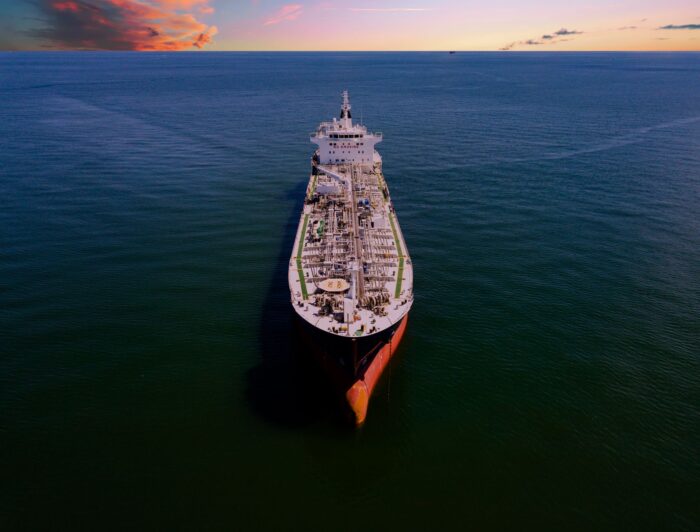
Crude benchmarks extended their slide on Thursday, with West Texas Intermediate briefly trading below $70 a barrel for the first time since early March and Brent settling near its lowest level since the eve of U.S.-Israeli strikes on Iran in late February. The move came despite a reported projectile strike on a cargo vessel near the Omani coast that briefly halted an International Maritime Organization-coordinated evacuation effort. Markets shrugged off the incident as tanker traffic through the Strait of Hormuz doubled in a single day to its highest level since the conflict began, releasing millions of barrels of previously trapped crude into global supply chains.
The rapid unwinding of the geopolitical premium reflects tangible progress in de-escalation. U.S. officials confirmed that roughly 20 million barrels exited the strait in a 24-hour window this week, aided by military escorts and newly designated temporary routes north and south of the primary shipping lane. Oman has pledged to keep passages open without imposing tolls, while Saudi Aramco resumed loading operations at Ras Tanura after a four-month hiatus. Iranian production, long constrained by sanctions and the blockade, now faces a pathway to gradual ramp-up under temporary sanctions relief tied to nuclear inspection commitments.
Physical markets are already reflecting the shift. Crude cargoes from the Middle East are trading at widening discounts across Asia and Europe, prompting refiners to accelerate purchases and rebuild inventories depleted during the disruption. The Brent forward curve has flipped into contango for nearby contracts, signaling ample near-term supply after months of scarcity. Analysts at major banks have begun trimming price forecasts for the second half of 2026, citing lower-than-expected inventory draws in the OECD and signs of softer demand, particularly from China.
Yet the picture is more nuanced than a simple return to pre-war equilibrium. Hundreds of vessels remain anchored or loitering in the Gulf, carrying an estimated 60 million barrels or more of stranded crude and products. Clearing these backlogs represents a one-time flood of supply that could weigh on prices for weeks, even as full normalization of production and loading schedules stretches into the third quarter. Mines and war-risk insurance premiums continue to constrain optimal routing, while ship-to-ship transfers in safer waters have already moved meaningful volumes outside official channels.
The dominant narrative portrays the Hormuz reopening as an unambiguous bullish catalyst for risk assets and a deflationary tailwind for global growth. In this view, restored flows will swiftly erase inflationary pressures from energy and allow central banks greater latitude to ease policy. This framing underestimates the second-order mechanics already at work.
The surge in exiting tankers is not new incremental production but the release of inventory built up over months of forced storage. This front-loaded supply wave arrives precisely as seasonal summer demand peaks in the Northern Hemisphere, yet it also masks underlying tightness in upstream capacity. Iranian fields require time and investment to return to full output after sanctions-induced under-maintenance. Gulf producers have diverted some volumes via pipelines to bypass the strait entirely during the crisis, a practice that may persist as a hedge against future volatility. Meanwhile, global inventories remain historically low in key hubs such as Cushing, where levels have approached operational minimums. The market’s swift pricing of de-escalation risks overlooking how fragile the interim accord remains amid mutual accusations over the latest vessel incident and unresolved details on long-term transit security.
A subtler dynamic involves shifting capital allocation within the energy complex. Independent producers and shale operators that curtailed drilling during the price spike now face renewed pressure to maintain discipline, while national oil companies in the Gulf recalibrate budgets around potentially lower sustained realizations. The rapid price decline also complicates fiscal planning for oil-dependent economies that expanded spending on the back of wartime windfalls.
Portfolio managers should treat the current dip as a regime shift rather than a temporary correction. Near-term oversupply from stranded cargoes creates tactical opportunities in refining margins and storage plays, particularly for operators with flexible logistics. However, the forward curve structure warns against overexposure to prompt contracts. Longer-dated positions may benefit from any renewed friction, given the structural vulnerabilities that persist: concentrated production geography, aging infrastructure, and the precedent of hybrid warfare tactics that fall short of full closure yet impose persistent risk premiums.

Energy-intensive sectors such as chemicals, aviation, and shipping stand to gain from lower input costs, but investors must monitor second-round effects on inflation expectations and monetary policy. A sustained period below $70 could accelerate the unwind of long commodity positions accumulated during the crisis, amplifying volatility in correlated assets including emerging-market currencies and credit spreads in the Gulf.
For corporate strategists, the episode reinforces the value of geographic diversification in supply chains and accelerated investment in non-Gulf sources, including U.S. shale, Canadian oil sands, and Brazilian pre-salt. Sovereign wealth funds and long-term capital allocators would do well to stress-test assumptions around energy security, recognizing that Hormuz has demonstrated its capacity to disrupt without ever being fully blockaded for extended periods.
The market’s pricing of normalization has outpaced the physical reality of restoring reliable, high-volume flows. While the immediate relief is real, the path ahead features meaningful friction points that could reassert upward pressure by late summer. Decision makers who position for both the supply flush and its limits will hold the advantage in the months ahead.
Enjoyed this article? Access highly trusted training content and prime market insights by investing in a membership.








