E-Mini S&P 500
Equities Face Key Technical Inflection as Hawkish Fed Risks Challenge AI-Driven Rally
The market closed with an outside bar, which could signal a shift in the current one-time-framing higher behavior toward a more bearish bias.
Every market story from The Private Banker, newest first.
The market closed with an outside bar, which could signal a shift in the current one-time-framing higher behavior toward a more bearish bias.
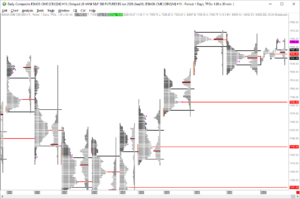
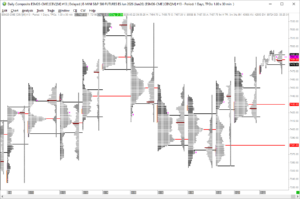
Looking at the microstructure, the market closed with a balanced-to-short-covering profile structure, favoring a more balanced approach as traders may continue leaning on the value extremes for rotational scenarios.
Fresh from President Donald Trump’s mid-May summit with Xi Jinping, US and Chinese officials are moving through a delicate extension of last year’s trade truce amid tariff refund processing, selective purchase commitments, and persistent structural frictions.
Diplomatic efforts between Washington and Tehran are gaining traction, with mediators in Qatar and Pakistan reporting movement toward a framework that could reopen the Strait of Hormuz and ease one of the most severe energy supply disruptions in modern history.
The market closed with a balanced profile structure, featuring a selling tail around the highs that could act as a potential selling zone if headline risk re-emerges.
Global central banks are moving through one of the most complex policy environments in years. A resurgence in energy prices from Middle East disruptions has reignited inflation concerns just as many economies show signs of softening growth and labor-market cooling.
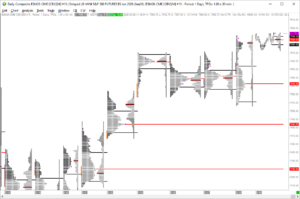
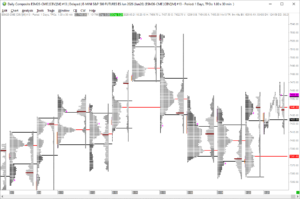
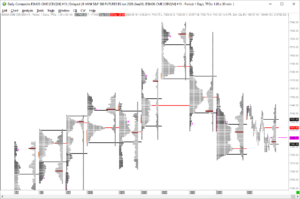
The market continues to one-time-frame higher, with both value area and POC migration trending upward, supporting a bullish bias.
Crude oil prices remain volatile as traders weigh tangible progress toward a U.S.-Iran peace agreement against the reality of depleted global inventories and uncertain demand recovery.
U.S. equity markets reopen Tuesday after the Memorial Day holiday with major indexes near record highs, but thin summer trading volumes could amplify reactions to a slate of economic data testing the durability of the year’s rally.
The euro zone is sliding deeper into an energy-induced trap. Flash PMI data released Thursday show private-sector activity contracting at the fastest pace in over two-and-a-half years, with France recording one of its weakest readings in more than five years.
The Federal Reserve is standing pat with its benchmark rate in the 3.50%-3.75% range, but fresh signals from recent FOMC minutes point to a more hawkish posture than markets had anticipated just months ago.
Traders are pricing in a diplomatic breakthrough that would reopen the Strait of Hormuz, the world’s most critical energy chokepoint.
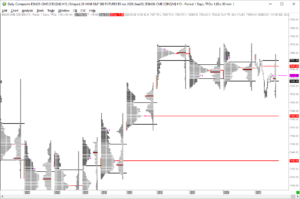
The market closed with a double-distribution volume and TPO structure, suggesting signs of short covering around the lows and giving the session a bullish bias as the market opened above value.
The guns in the Middle East have quieted, for now. A fragile ceasefire between the US, Israel, and Iran has held through sporadic exchanges of fire and tanker incidents in the Strait of Hormuz, but not without cost.
NVIDIA Corp. delivered another blockbuster quarter, reporting fiscal first-quarter 2027 revenue of $81.6 billion, up 85% year-over-year and beating Street expectations, fueled almost entirely by insatiable demand for its AI accelerators.
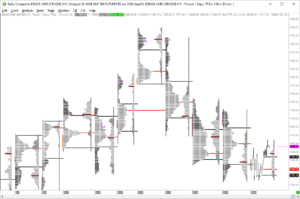
The market closed with a double distribution profile structure, making the environment slightly tricky to trade.
Looking at the profile structure, we can see overlapping value areas from previous sessions, indicating that the market has entered a more balanced environment.
The market opened above the TPO value area, with the distribution positioned in the lower price range of yesterday’s session, giving today a slight bullish tendency.
The Federal Reserve is locked in a restrictive holding pattern with no rate cuts priced in before late 2026, according to a detailed institutional dashboard synthesizing CME FedWatch futures, FOMC signals and fresh macro data.
U.S. stocks pushed to fresh records this week as investors shrugged off hotter-than-expected inflation and lingering Middle East risks, embracing a narrative that artificial-intelligence spending and corporate earnings will trump geopolitical headlines.
Saudi yuan settlements, BRICS payment systems and rising non-dollar energy flows signal a structural shift in reserve currency dynamics
As regional GCC exporters, Asian & European nations along with the US want to get the Straight of Hormuz open, peace talks reach a current stalemate, but the temporary ceasefire hangs together.
March 2026 showed divergent Central bank activity, as China added to it's Gold reserves Turkey heavily reduced it's holdings in order to try to stabilize it's collapsing Turkish Lira.
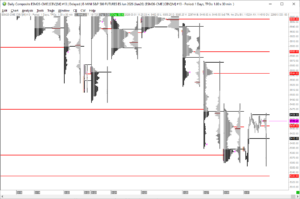
In the current market context of the E-mini S&P 500, price action reflects a double distribution structure across both price and volume, signaling a complex and non-linear environment.