Treasury Secretary Scott Bessent declared the United States would do “whatever it takes” to support Japan’s efforts to stabilize the yen, two days after confirming a rare coordinated intervention with Tokyo that marked the first joint yen-buying operation since 1998. The remark came in a CNBC interview on August 4 following the July 31 action, which, together with Japan’s solo intervention the prior day, lifted the currency from near 40-year lows around 164 per dollar to as strong as near 155. By Monday August 10 the yen had reversed course, sliding as much as 1 percent past 159 and erasing roughly half the post-intervention gains.
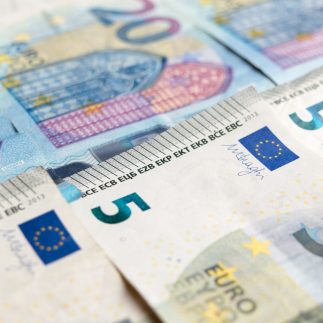
Japan’s Ministry of Finance and the Bank of Japan conducted the bulk of the operations. Estimates derived from Bank of Japan account data put Japan’s July 30 purchases at approximately ¥8.45 trillion, or about $53 billion, the largest single-day intervention on record for Tokyo. Additional Japanese buying on July 31 was estimated in the range of $30 billion to $36 billion. US participation involved sales of euros from the Treasury’s Exchange Stabilization Fund to purchase yen, with a notepad visible during a July 31 cabinet meeting at Camp David listing a target of $5 billion to $10 billion. The Federal Reserve Bank of New York executed the trades on the Treasury’s behalf. Officials described the joint step as a response to disorderly market conditions and substantial undervaluation of the yen that risked competitive devaluations across Asia.
Bessent subsequently said the United States remained ready to participate in further joint action and expressed support for Japan’s use of the Federal Reserve’s Foreign and International Monetary Authorities Repo Facility. That facility permits foreign authorities to borrow up to $60 billion against US Treasury collateral, allowing Japan to obtain dollars without selling its holdings of more than $1.1 trillion in Treasuries. Bessent called for the facility to be upsized, noting that the bond market has grown substantially since the program’s creation in 2020. Japan confirmed plans to draw on the facility for future yen support.
The Exchange Stabilization Fund, the primary instrument available to the Treasury for currency operations, held total assets of approximately $217 billion as of June 30, according to the latest balance sheet. Liquid foreign-currency holdings were far smaller, with foreign currency and related assets reported near $4.6 billion before the intervention and the bulk of non-dollar resources consisting of special drawing rights. Market participants and analysts have noted that the fund’s practical capacity for sustained yen purchases remains constrained relative to Japan’s reserves and daily foreign-exchange turnover.
While coverage has focused on the symbolic weight of the first US-Japan coordinated yen-buying intervention in nearly three decades and Bessent’s open-ended pledge, the scale of US involvement was modest compared with Japan’s outlays. Historical joint operations in 1998, 2000 and 2011 typically involved roughly equal splits between the Treasury and the Federal Reserve. In this instance, reporting indicated the Federal Reserve did not contribute its own funds, leaving the operation reliant on the Exchange Stabilization Fund’s limited liquid resources. The yen’s subsequent retreat past 159 within days of the peak near 155 demonstrated that even the combined action failed to reverse underlying pressures from interest-rate differentials and Japan’s energy-import costs.
Bessent’s emphasis on the FIMA facility as a scalable backstop also faces practical constraints. The current $60 billion per-counterparty daily limit was designed for short-term dollar liquidity during stress rather than repeated large-scale currency defense. Expanding it requires Federal Reserve approval and does not expand the Treasury’s own balance-sheet capacity. Analysts have observed that continued reliance on euro sales or SDR monetization would quickly exhaust readily deployable assets without additional congressional authority or Fed balance-sheet participation.

A Reuters photograph taken during the July 31 Camp David cabinet meeting captured Bessent’s handwritten “To Do” list explicitly noting “Buy Japanese Yen (JPY) $5-10 bil,” providing an unusually direct window into the planned scale of US purchases hours after banks had been notified of possible intervention. The Treasury chose to sell euros rather than dollars, a step Bessent later described to European counterparts as a simple reallocation of resources, reflecting the fund’s existing foreign-currency composition dominated by euro-denominated assets.
Japan’s July 30 operation alone generated the highest yen trading volumes in nearly 12 years on CME Group data. The two-day Japanese outlays approached or exceeded ¥13 trillion when combined estimates are included, dwarfing the US contribution. Bessent has repeatedly linked yen stability to broader Asian currency dynamics, citing the late-1990s Asian financial crisis as partly triggered by excessive yen weakness, an angle less prominent in day-to-day market commentary than the immediate Treasury-yield implications of any forced Japanese sales of US debt.