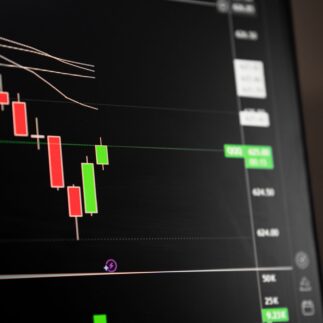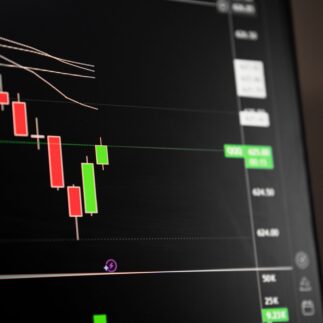
South Korea’s benchmark Kospi Index closed at 5,663.24 on July 29, down 5.98% or 360.42 points, after sliding as much as 12.63% to 5,262.77 in the session and prompting a 20-minute trading halt at 12:32 p.m. local time. The move extended a 10.84% decline on July 28 that left the index at 6,023.66, producing a cumulative two-day loss of approximately 16% from the July 27 close. The circuit breaker marked the ninth activation for the Kospi in 2026 and the first instance of consecutive-day triggers on the main board; the Kosdaq also halted trading after an 8% decline, the first dual-market consecutive suspension since 2011.
Retail investors sold a net nearly 2 trillion won ($1.38 billion) of Kospi shares on July 29, while foreign investors offloaded a net 1.23 trillion won. Institutional investors purchased a net 3.16 trillion won. The prior session had seen foreigners sell nearly 5 trillion won and retail investors buy a net 4.3 trillion won. Trading volumes remained light as buyers stepped aside. SK Hynix shares closed down 9.61% at 1,401,000 won after falling as much as nearly 20% earlier; Samsung Electronics finished 5.23% lower at 208,500 won following an intraday decline of as much as 14%. The two companies account for more than half of the Kospi’s market capitalization.
SK Hynix reported second-quarter revenue of 79.3187 trillion won, up 256.8% from a year earlier, and operating profit of 60.5426 trillion won, up 557.2%, both quarterly records. The figures missed consensus estimates of approximately 84 trillion won in revenue and 64 trillion won in operating profit. The company also disclosed first-half operating profit near 100 trillion won. The results followed a global semiconductor sell-off linked to concerns over Chinese competition, including the market debut of ChangXin Memory Technologies, and questions about the pace of AI-related capital spending. The Kospi has now declined roughly 40% from its June peak near 9,114–9,385 and is on track for its largest monthly loss on record, having already fallen about 29% in July through the prior session.
Finance Minister Koo Yun-cheol apologized in a parliamentary session for the earlier introduction of single-stock leveraged exchange-traded funds, stating they had not been sufficiently scrutinized. Senior officials including the Bank of Korea governor and financial regulators convened an emergency meeting Wednesday afternoon to review market-stabilization measures. The Kospi remains up more than 40% year-to-date in U.S. dollar terms.
Despite the focus on SK Hynix’s earnings miss as the immediate catalyst, the two-day decline occurred against a backdrop of record quarterly profits and year-over-year gains exceeding 250% for the chipmaker. Institutional investors acted as net buyers of 3.16 trillion won on July 29 even as the index hit multi-month lows, contrasting with the retail and foreign outflows. The Kospi’s year-to-date advance of more than 40% in dollar terms persists after the correction, and no systemic banking or credit event accompanied the moves. Circuit-breaker activations reached nine in 2026, yet historical parallels such as the 2008 financial crisis and 2011 U.S. rating downgrade produced consecutive dual-market halts under broader macroeconomic stress rather than sector-specific valuation adjustments.
The July 29 circuit breaker was the 15th in Kospi history. Retail margin activity earlier in the month had already generated more than 1.2 million margin-call notices across leveraged accounts by mid-July, with 320,000 to 360,000 accounts fully liquidated according to Goldman Sachs estimates, equivalent to roughly one in 30 working-age adults. Single-stock leveraged ETFs, rolled out in May, amplified both the preceding rally and the subsequent forced selling. SK Hynix’s American depositary receipts, which began Nasdaq trading on July 10, traded lower in U.S. premarket sessions amid the Seoul declines. At the July 29 intraday low the index stood 44% below its June 19 intraday peak of 9,385.59.