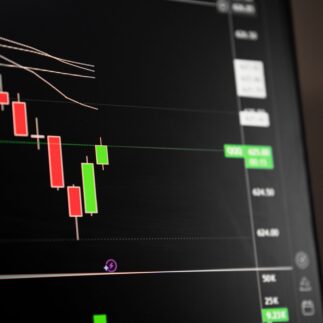
Morgan Stanley’s strategists moved their global equity stance to “max overweight” in a note dated Nov. 15, arguing that the artificial-intelligence spending cycle remains intact and that 2027 is the year to take risk. The call lands as chip stocks extend a rout that has cut a major semiconductor index by about 23% since early October.
“With risk assets having cheapened, we embrace risk,” the strategists wrote. The MSCI All Country World Index trades at roughly 15 times forward earnings, the lowest multiple since 2023 and about five points below a year ago. The bank projects earnings growth of 13% for the index in 2027.
The regional changes are specific. Japan and Europe were upgraded to overweight, joining the U.S., which stays overweight with a tilt toward pro-cyclical quality companies. Emerging markets remain at equal-weight, with China’s deflation and weak growth cited as the constraint. Korea is preferred to Taiwan on valuation.
The note frames 2027 as a year in which returns increasingly accrue to companies that adopt AI rather than to the suppliers of chips and infrastructure, a shift away from the leadership that has driven the market since 2023.
Markets opened the week on the defensive. The S&P 500 closed Friday at 7,561.67, and futures pointed 0.3% to 0.4% lower Monday, with Nasdaq futures down close to 1%. Nvidia reports results Tuesday, days after its chief executive’s resignation. The MSCI ACWI sits more than 4% below its August high.
The bank’s own risk list cuts against the optimism. It expects two more Federal Reserve rate hikes and sees the 10-year Treasury yield reaching 5.05% in the first half of 2027. The benchmark yield is already above that level, at about 5.14% to 5.15% on Monday, so the bank’s first-half 2027 marker has already been passed.

The strategists also flagged that inflation could force the Fed into a stance more restrictive than the two additional hikes they have penciled in, and that the AI capital-spending cycle could prove shorter than they assume.
Less noticed is the asset mix around the equity call: the bank also favors investment-grade corporate bonds and gold, and expects a slightly stronger dollar, a combination that pairs maximum equity exposure with defensive holdings elsewhere.
Sources: Bloomberg, Yahoo Finance, finance.biggo.com.