
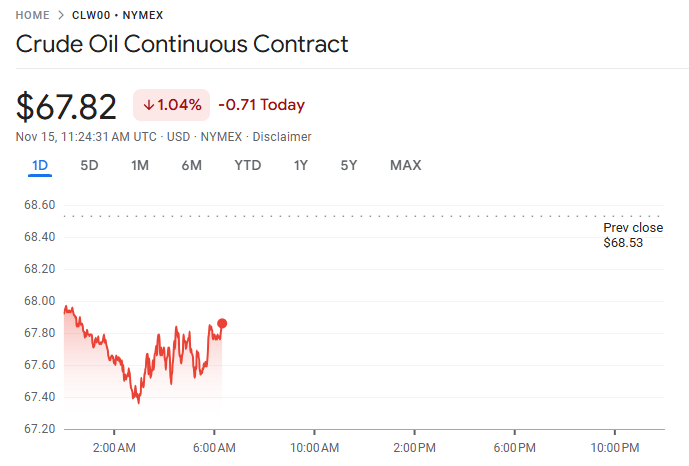
WTI crude prices retreating toward $68 reflect growing concerns about a potential oil surplus in 2024, driven by slowing demand growth in China and rising global production. The International Energy Agency’s (IEA) projection of increased supply, particularly if OPEC+ restores previously curtailed output, reinforces a bearish outlook. Additionally, a strong U.S. dollar, which reduces the competitiveness of dollar-denominated commodities, is adding downward pressure on crude prices.
While crude inventories rose by 2.1 million barrels last week, exceeding expectations, the sharp 4.4-million-barrel decline in gasoline stockpiles has brought inventories to a decade-low for this time of year. This divergence between crude and refined product inventories highlights potential near-term volatility, especially in products like gasoline and heating oil, which remain sensitive to seasonal demand patterns.
Natural gas futures remain subdued near $2.7/MMBtu despite below-average storage builds. While heating demand is expected to rise later in November, warmer-than-usual temperatures through mid-month are limiting immediate demand increases. Recent production disruptions due to Hurricane Rafael and a nine-month production low in early November have not been sufficient to offset above-average storage levels, indicating a well-supplied market.
Tight supplies and falling distillate inventories are supporting heating oil futures, which climbed above $2.22 per gallon. With colder weather expected to increase heating needs later in November, demand for heating oil may rise, providing potential upside. The EIA’s report of a 1.4-million-barrel decline in distillate stocks, coupled with a 1-million-barrel drop in heating oil inventories, signals a tightening market ahead of the winter season.
Strategic Implications:
The bearish outlook for crude, driven by oversupply concerns and a strong dollar, suggests maintaining a cautious stance. Reducing exposure to crude oil or employing hedging strategies may help manage downside risk. Any significant changes in OPEC+ policy or Chinese demand trends should be monitored closely, as they could alter the supply-demand balance.
The tightness in gasoline and heating oil inventories presents selective opportunities. While gasoline futures are under pressure from falling crude prices and seasonal demand declines, the low stockpile levels may limit downside risks. Heating oil, supported by tightening supplies and anticipated colder weather, offers a more favorable risk-reward profile for the coming weeks.

While natural gas prices remain pressured by above-average storage levels, the potential for increased heating demand later in November may offer short-term opportunities. Investors should remain cautious, as warmer-than-usual temperatures through mid-month and robust supply levels may cap significant price increases.
The IEA’s monthly market report and updates on OPEC+ decisions will be crucial for assessing crude oil supply dynamics. Similarly, monitoring weather forecasts and storage trends will help refine strategies for natural gas and heating oil positions.
Enjoyed this article? Access highly trusted educational content and market research by investing in a membership to become part of our community.








