
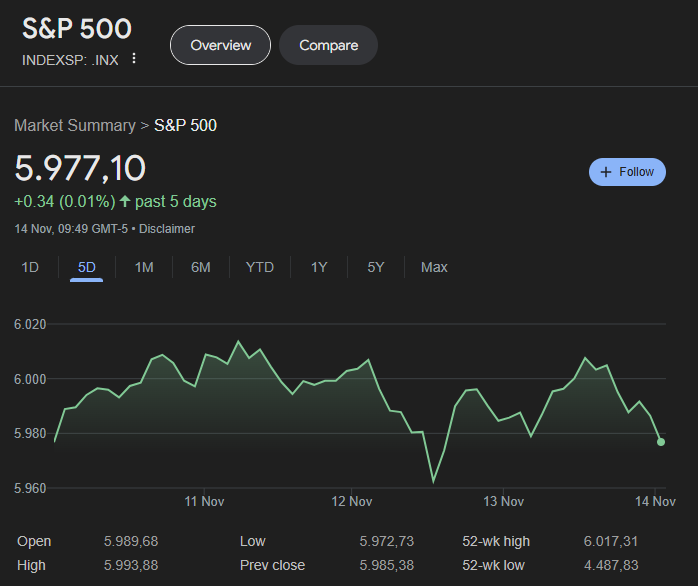
U.S. stock gains were modest, reflecting a slowing post-election rally as the Producer Price Index (PPI) data tempered expectations for a December rate cut. October’s PPI rose by 0.2% month-over-month, in line with forecasts, but the year-over-year increase of 2.4% slightly exceeded expectations. This result, paired with the lowest unemployment claims since May, indicates underlying economic strength that may support the Fed’s cautious stance on rate cuts.
The dollar index (DXY) held at 106.9, reflecting market confidence in Trump’s economic policies and expectations of inflationary pressure from higher tariffs and deficit spending. The yield on the 10-year Treasury climbed to 4.48%, its highest since May, underscoring market anticipation of a slower Fed easing path. Higher yields and a strong dollar present headwinds for sectors sensitive to interest rates and currency fluctuations, such as technology and industrials.
Investors are now looking to Fed Chair Jerome Powell’s upcoming speech for further insights into December’s policy direction. With rate cut expectations slightly reduced after the PPI data, Powell’s comments will be pivotal in shaping rate outlooks. Currently, markets are pricing in an 82% probability of a 25-bps cut in December, down from 86% before the PPI release, reflecting tempered expectations amid mixed inflation signals.
Notable earnings reports included Disney’s better-than-expected results, which drove a 10% surge in shares, and a 2% gain in Applied Materials ahead of its announcement. Conversely, Cisco’s 2% decline, driven by a softer revenue outlook, indicates selective pressure within tech. These earnings show resilience in certain sectors while reinforcing the importance of careful sector allocation in a mixed economic environment.
Strategic Implications:
With a muted post-election rally and selective sector performance, a balanced equity approach is advisable. Emphasizing resilient sectors, such as consumer discretionary and healthcare, alongside high-quality technology companies with strong fundamentals, may provide stability. In the current interest rate and dollar environment, caution is warranted in rate-sensitive and export-oriented sectors that may be more affected by a strong dollar and elevated yields.
With the 10-year Treasury yield climbing above 4.48%, managing duration risk is key. Short-to-medium-duration bonds may offer stability, while inflation-linked securities can provide a hedge if inflationary pressures persist. Monitoring Powell’s speech and Fed commentary will be critical for adjusting rate-sensitive holdings, as any indication of a pause or slower rate cut path could impact longer-dated bonds.

Given dollar strength driven by inflation expectations and deficit spending, currency hedging for portfolios with significant international exposure may mitigate potential headwinds. For U.S.-based investors, exposure to domestic assets may be preferable in the short term, especially for sectors less impacted by currency volatility.
With inflation data mixed, upcoming remarks from Powell and additional data releases will be essential for refining rate cut expectations. Monitoring both CPI and PPI trends, along with labor market data, will provide crucial insights into the Fed’s outlook and help manage inflation-sensitive positions.
Enjoyed this article? Access highly trusted educational content and market research by investing in a membership.








