
Our perspective highlights the implications of the ongoing U.S. presidential election results, congressional control, and upcoming Federal Reserve decision on asset allocation and risk management strategies.
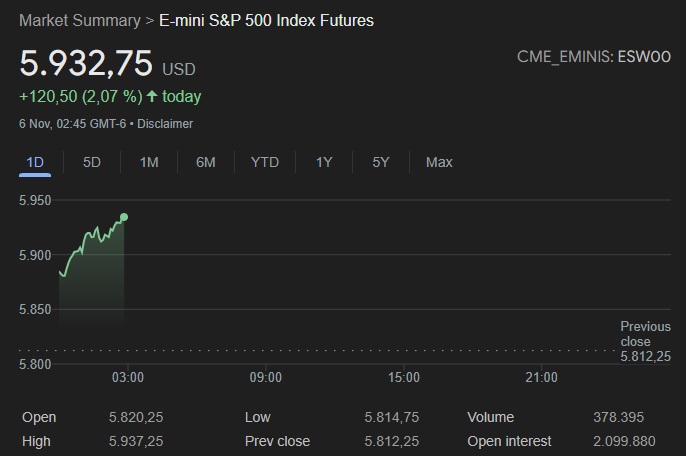
U.S. stock futures are gaining momentum as early election results show a lead for Trump with 246 electoral votes versus Harris’s 214. A Trump win, alongside market focus on the balance of power in Congress, is driving expectations for spending and tax policy shifts, particularly if one party secures a unified government. This election outcome could bring significant policy changes, impacting sectors tied to fiscal expansion, such as infrastructure, defense, and energy.
Tuesday’s rally saw strong gains across all sectors, with consumer discretionary, industrials, utilities, and technology leading. Palantir Technologies and Astera Labs were notable outperformers, reflecting investor interest in companies with strong quarterly results amid broader market optimism. The continued sectoral breadth of gains indicates investor confidence, but it also underscores the importance of selectivity, especially as election outcomes become clearer and potential policy impacts vary across sectors.
The dollar index has surged nearly 2% to a four-month high above 105, supported by what are referred to as “Trump trades,” as his economic policies are often viewed as inflationary due to potential tax cuts, tariffs, and higher government spending. This strength in the dollar, most notable against the euro and yen, may create headwinds for U.S. multinationals with foreign revenue exposure. Meanwhile, the 10-year U.S. Treasury yield has climbed to 4.4%, its highest level in four months, as markets price in inflationary pressures tied to a Trump victory. This rising yield environment highlights the need to manage duration risk, particularly with inflation-sensitive assets.
The Fed’s expected 25-bps rate cut on Thursday reflects a cautious approach as it balances inflation with a softening labor market. Markets are also pricing in a further cut in December, which could provide additional support for equities. However, the Fed’s flexibility will depend on how inflation and labor data evolve in coming months, especially as election-driven fiscal changes might impact inflation and growth expectations.
Strategic Implications:

- Equity Positioning: With election results and a Trump victory boosting fiscal expansion themes, investors may consider selectively increasing exposure to sectors likely to benefit from policy shifts, such as infrastructure, defense, and consumer discretionary. At the same time, maintaining a defensive allocation to sectors less sensitive to policy changes, such as healthcare and utilities, can provide stability amid potential volatility tied to congressional outcomes.
- Fixed Income and Rate Sensitivity: The increase in Treasury yields driven by “Trump trades” and inflationary expectations signals caution for fixed-income portfolios. Maintaining a short-to-medium-duration bias can help manage duration risk, while selective exposure to inflation-linked bonds may provide added resilience. Additionally, elevated yields offer an opportunity to capture attractive yields in high-quality credit, particularly for portfolios with income objectives.
- Currency and Global Exposure: The dollar’s recent strength, particularly against the euro and yen, may impact U.S. multinationals, especially those with substantial foreign revenue. Currency hedging strategies may be prudent for portfolios with global exposure, as currency fluctuations could remain elevated amid ongoing election results and Fed policy shifts. In addition, monitoring emerging market assets could be valuable, given potential dollar strength and rate volatility.
- Monitoring Election and Policy Developments: With both the election and Fed decision likely to shape market sentiment, staying flexible and adjusting to potential policy changes is essential. A Trump win or congressional sweep could introduce shifts in fiscal policy, impacting sectors such as technology, industrials, and energy. Proactively managing exposure to policy-sensitive assets will help navigate these developments effectively.
Like this article? Access highly trusted educational content and market research by investing in a membership to become part of our community.








