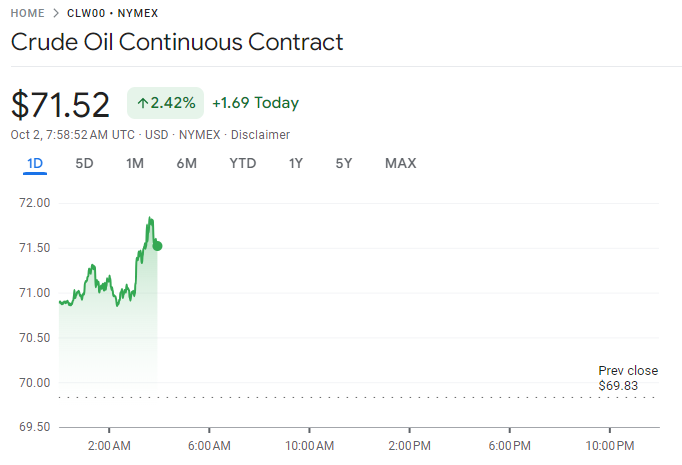
The surge in WTI crude oil prices reflects the market’s heightened concern over the potential for broader conflict in the Middle East, particularly with Iran, a key OPEC member, directly involved. Iran’s missile launch against Israel, along with Israel’s promise to intensify retaliatory strikes, significantly raises the risk of disruptions to oil supply from the region. Geopolitical instability in such a crucial oil-producing area often leads to a spike in prices due to the potential for supply chain interruptions.
At the same time, U.S. crude oil inventories have declined for the second consecutive week, but the draw was smaller than expected, which might help moderate some of the price surge in the short term. However, the ongoing impact of Hurricane Helene on U.S. natural gas production in the Gulf of Mexico, along with widespread power outages, is adding more supply concerns, particularly for natural gas markets. The reduced output from the Gulf is further straining supply, though lower demand forecasts, due to reduced consumption in power generation, could somewhat offset this.
Meanwhile, the drop in U.S. gasoline futures to near their 2021 lows highlights persistent demand weakness, especially as China’s economic struggles continue to impact global fuel consumption. Speculation about Saudi Arabia potentially easing its voluntary production cuts and Libya’s potential restoration of crude exports could also weigh on oil prices, helping to balance the upward pressure from the geopolitical tensions.
In summary, while the immediate price increases are driven by fears of supply disruptions in the Middle East, the broader market outlook remains uncertain, especially with the potential for additional supply coming online from Saudi Arabia and Libya, alongside weak demand from China.