
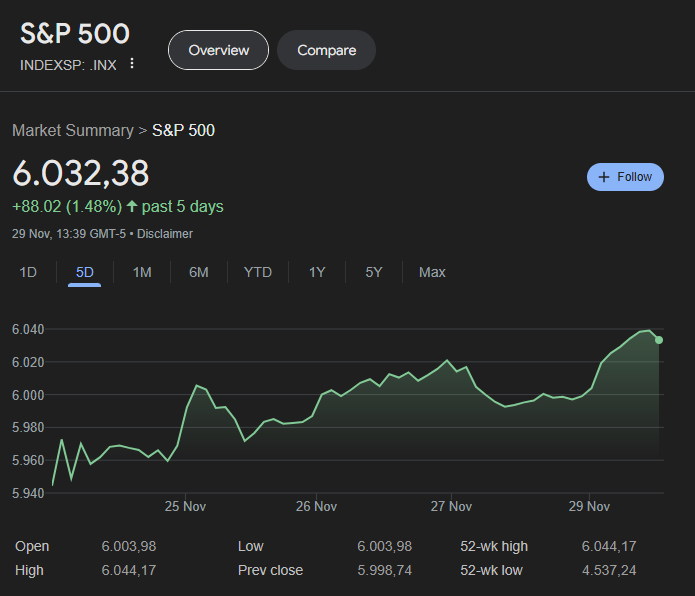
U.S. stock futures are steady following a strong November, where major indices posted gains between 5.7% and 7.8%, with the Dow and S&P 500 reaching all-time highs. This rally reflects optimism surrounding the post-election policy environment under President-elect Donald Trump, coupled with continued economic and corporate sector resilience.
Looking ahead, investors await U.S. manufacturing and construction spending data for signals on economic momentum, alongside labor market updates later this week. Fed speeches will also be closely watched for insights into the December rate decision.
The dollar index rose above 106.2, recovering from last week’s losses amid U.S. economic strength and a deteriorating outlook in other regions. Trump’s threat of 100% tariffs on BRICS nations supporting alternative currencies bolstered the dollar as markets assessed the likelihood of heightened trade tensions.
The euro faced pressure due to political uncertainty in France, further supporting the dollar. Meanwhile, a weaker yen reflects diverging central bank policies, as traders remain uncertain about the timing of the next Bank of Japan rate hike.
The 10-year U.S. Treasury yield rose above 4.2%, ending a two-week decline as strong economic performance heading into 2025 boosted investor confidence. Rising yields also reflect geopolitical concerns and the potential for prolonged dollar dominance amid Trump’s trade rhetoric.
Markets now assign a 67% probability to a 25-basis-point rate cut in December, up from 53% a week ago. Upcoming labor market data and Fed speeches will provide further clarity on the trajectory of monetary policy.
Strategic Implications:
Maintain a balanced approach, favoring sectors that could benefit from continued U.S. economic resilience, such as industrials, consumer discretionary, and financials. Given the potential for geopolitical risks and trade uncertainty, defensive sectors like healthcare and utilities may provide downside protection.
Monitor developments in U.S.-China trade relations and the BRICS currency discussion for potential sector-specific impacts, particularly in technology and manufacturing.
With the 10-year Treasury yield rebounding, short-to-medium-duration bonds remain a prudent allocation to manage duration risk. Inflation-protected securities (TIPS) may also hedge against potential inflationary pressures stemming from fiscal and trade policies under the incoming administration.

The dollar’s resilience underscores the importance of currency hedging for portfolios with international exposure, particularly in emerging markets. Conversely, U.S. multinationals with significant foreign revenue could face headwinds from a stronger dollar.
Stay vigilant about geopolitical risks, including U.S.-BRICS trade tensions and political instability in Europe, which could influence currency and equity markets globally.
U.S. labor market data and Fed commentary will be pivotal in shaping expectations for December’s rate cut and the broader 2025 outlook. Additionally, updates on Trump’s trade policies and BRICS currency developments will require close attention for their potential market implications.
Enjoyed this article? Access highly trusted educational content and market research by investing in a membership.








