
The latest developments in U.S. equity, currency, and bond markets reflect a mix of optimism around policy stability under the incoming administration and cautious adjustments to monetary policy expectations. Below is our perspective:
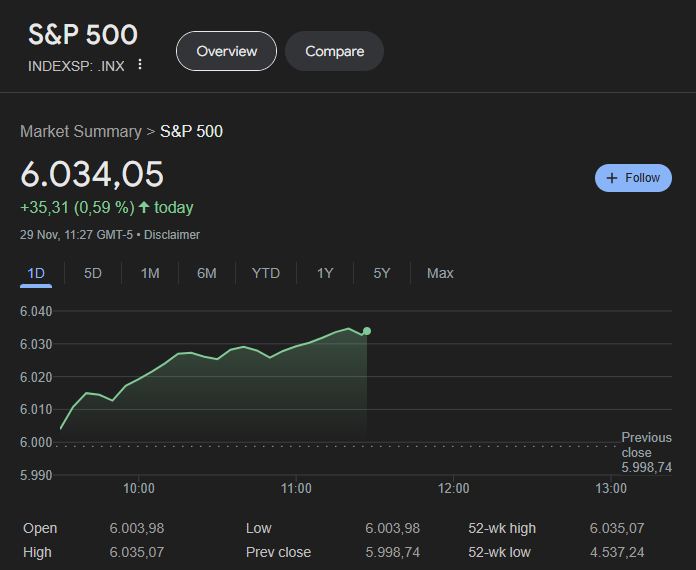
U.S. equities posted modest gains in a shortened trading session, with semiconductor stocks leading the charge. Nvidia, Applied Materials, and Lam Research benefited from reports suggesting less stringent restrictions on semiconductor equipment and AI memory chip sales to China, signaling potential relief for the sector.
Retailers also gained on optimism around Black Friday sales, with Walmart, Target, and Costco seeing positive momentum. This highlights continued consumer resilience despite a mixed economic backdrop.
November’s strong performance across the major indices, including a 5.1% gain for the S&P 500, reflects optimism about a potentially more moderate trade and economic policy stance under a second Trump administration.
The dollar index fell below 106, marking its first weekly decline in nine weeks. The nomination of Scott Bessent as Treasury Secretary has eased fears of drastic policy changes, contributing to the pullback. The dollar’s decline accelerated after PCE inflation data aligned with expectations, reducing immediate fears of more hawkish Fed actions.
Despite this week’s decline, the dollar remains up approximately 2% for November, supported by expectations of fiscal expansion and potential inflationary pressures tied to Trump’s policy agenda.
The 10-year U.S. Treasury yield dropped to 4.23%, extending its weekly decline as markets priced in a higher probability (66.5%) of a 25-basis-point rate cut in December. This shift follows stable PCE inflation data and the perceived stability brought by Bessent’s nomination.
Treasury yields also faced pressure from safe-haven flows driven by escalating trade and geopolitical tensions, underscoring investor caution despite broader market optimism.
Strategic Implications:
Increased exposure to semiconductor and technology sectors may capture gains tied to improving trade sentiment and demand for AI-related products. Retail and consumer discretionary stocks offer additional opportunities, supported by robust holiday sales and resilient consumer spending.
A balanced approach is advised, given geopolitical and trade uncertainties. Defensive sectors like healthcare and utilities may provide downside protection if trade tensions re-escalate.

Falling Treasury yields and increased probability of a December rate cut support maintaining short-to-medium duration bonds. Inflation-protected securities (TIPS) may hedge against potential inflationary pressures tied to Trump’s fiscal policies.
Safe-haven flows into Treasuries underscore the need for vigilance around geopolitical risks, particularly in global trade and security dynamics.
The dollar’s decline presents potential opportunities in foreign markets, particularly for regions less impacted by geopolitical and trade tensions. Hedging strategies for U.S.-based international investments may help mitigate volatility as dollar strength could resurface depending on evolving policy expectations.
Enjoyed this article? Access highly trusted educational content and prime market research by investing in a membership to become part of our community.








