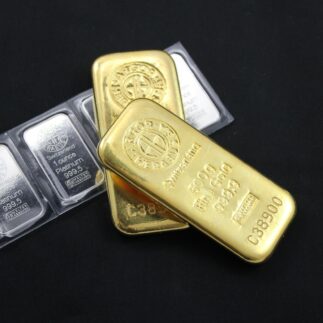
On Friday, gold prices steadied around $2,370 per ounce after initial gains were erased in a day marked by heightened geopolitical tensions and influential economic data from the US. The early surge in gold prices was triggered by an escalation in the Middle East, where Israel launched missiles at Iran. Initially, this led to a rush among investors towards safe-haven assets like gold. However, the situation de-escalated somewhat when reports indicated that Iran’s nuclear facilities remained intact, reducing fears over the extent of the conflict.
Concurrently, strong economic indicators from the US exerted downward pressure on gold prices. Retail sales and the Philadelphia Manufacturing PMI showed robust economic activity, which alongside hawkish remarks from Federal Reserve officials, suggested that interest rates might remain high for a longer period. On Thursday, both Atlanta Fed Bank President Raphael Bostic and NY Fed President John Williams highlighted the ongoing challenge of high inflation, signaling that the Federal Reserve is not inclined to lower interest rates soon. High interest rates typically reduce the attractiveness of non-yielding assets like gold.
Despite these fluctuations, gold ended the week with a 1.2% gain, bolstered by the initial geopolitical tensions and significant purchases by central banks, which continued to support its value.
Silver also experienced volatility, with prices hovering around $28 per ounce, down from a three-year peak of $28.9 reached on April 15th. Similar to gold, silver’s initial spike was driven by the geopolitical strife between Israel and Iran. However, as tensions seemed less severe than feared and with Iran reporting minimal impact from the attacks, silver prices retreated.
The outlook for silver was further complicated by the same economic data and Fed officials’ statements that affected gold. The prospect of sustained high interest rates in the US dampened the appeal of silver, another non-interest-bearing asset. Nonetheless, silver’s industrial demand remains robust, supported by its increasing use in electronics and solar power industries. The market’s deficit is evident in the declining volumes held in LBMA-certified vaults and other exchanges, reflecting a tight supply environment.
Enjoyed this article? Invest in a membership to access highly trusted educational content to expand into advanced wealth creation.