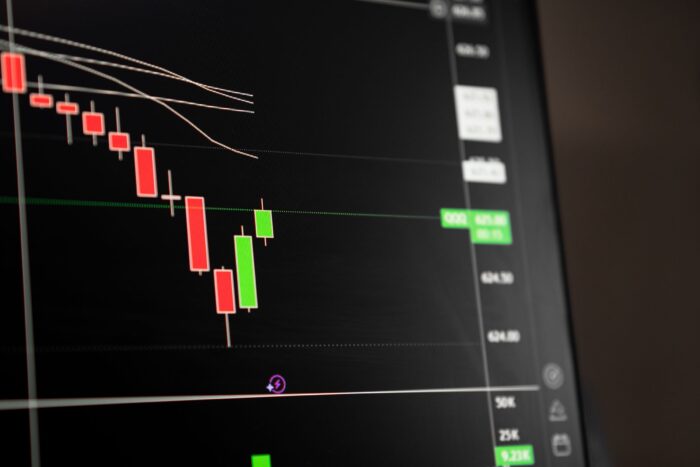
The S&P 500 fell about 2% in Friday trading, taking it roughly 10% below its Oct. 6 closing record and into the correction territory that Wall Street uses as a marker for a significant drawdown. The index closed Thursday at 7,175.83, already about 8.2% under the peak, after a sixth straight loss.
The Dow Jones Industrial Average had crossed the same line earlier, trading more than 10% below its closing record, and closed under 50,000 on Thursday for the first time since June. For the week, the Dow was down roughly 6%, the S&P 500 about 7% and the Nasdaq Composite about 8%, putting all three on course for their largest weekly declines in more than a year and the Dow for its worst week since April 2025.
The Nasdaq Composite was down between roughly 2.6% and 3.3% at points in Friday’s session, enough to erase its gain for 2026. Anthropic, which listed on Thursday in the largest IPO on record, fell about 11% after rallying 17% in its debut. Among chipmakers, Micron dropped more than 12%, AMD about 11% and Nvidia more than 7%, with Nvidia touching a new 52-week low. Intuit slid about 8% before the open after cutting its fiscal 2027 revenue outlook.
The Cboe Volatility Index traded above 30 on Friday morning, last at 30.99, its highest since March. Investors are also weighing the prospect of Federal Reserve rate increases, with gold falling 2.81% to $3,520.05 on expectations of a December hike. Bitcoin dropped below $60,000.
Asia took the first blow. Japan’s Nikkei 225 fell 5.06% to 56,436.65, the Kospi dropped 5.21%, SoftBank lost 14.48% and Taiwan’s Taiex declined 5.65%, its worst weekly fall since October 1997. The Stoxx Europe 600 opened 0.83% lower.
Treasuries offered some shelter. The 10-year yield eased about 6 basis points to 4.989%, the 2-year fell to 4.713% and the 30-year to 5.361%. The moves came as investors sought safer assets, even as the rate path remains a concern.
Not everyone reads the slide as the start of a deeper break. Catalyst Funds’ David Miller said investors still believe in AI but are becoming more selective, and ARK’s Brett Winton argued there is substantial upside ahead for AI software. JPMorgan’s Matthias Reschke described European corporate credit spreads as very resilient, though he expects inflation pressures to keep yields elevated for a while. University of Michigan consumer sentiment rose to 51.5 on Friday, and one-year inflation expectations fell to 3.7% from 4.3% in mid-month.

Bearish views are also on the record. Capital Economics’ James Reilly sees the S&P 500 falling to 6,500 by the end of next year, saying declines in tech and the broader index have further to run. Procyon’s Massimo Santicchia described the move as no longer only a valuation-driven correction and said it is becoming broader.
Less noticed, Apple rose about 0.5% before the open while other mega-cap technology names slipped. California’s attorney general also issued a subpoena to Nvidia, which moved little in extended trading. Seaport Research initiated coverage of Anthropic at neutral, with analyst Jay Goldberg calling the firm cautious rather than negative on the company.