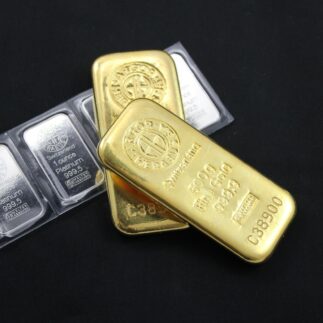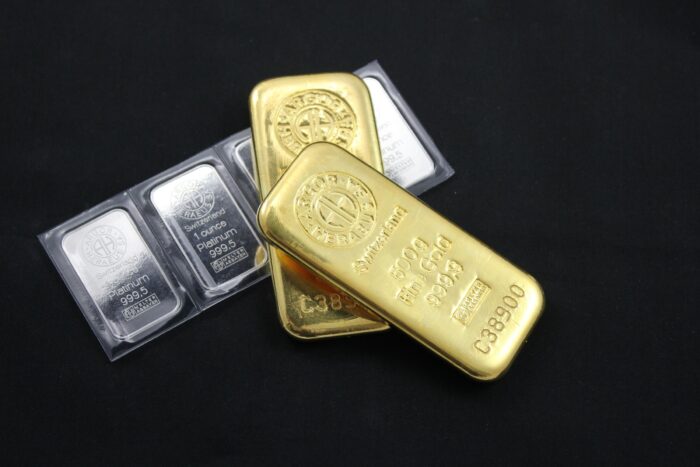
Gold is trading just under $3,900 an ounce, hovering near its lowest level in 14 months after a sell-off last week that erased roughly 5% of its value and left the metal on the defensive as markets price further Federal Reserve tightening.
Spot gold opened the week of Nov. 8 at $4,066.39 and reached a weekly high of $4,148.95 on Monday, before slipping below $4,000 on Wednesday. It touched $3,852.10 on Thursday morning, the lowest since October 2025, and was quoted at $3,883.98 on Friday, down 5.00% on the week. In London the metal lost about $150 on Thursday alone. Silver dropped more than $2 to dip below $50 an ounce.
The trigger was October consumer price data. Headline CPI rose 0.4% on the month, above forecasts, and the core measure also exceeded expectations. Treasury yields approached 5% on Thursday, with the 10-year note climbing back above that level for the first time in three weeks. The dollar index rose to its highest against major currencies since April 2025.
Fed officials reinforced the move. Governor Christopher Waller said in London on Nov. 10 that the tightening was largely priced in but that delivering the promised hikes still mattered. Dallas Fed President Lorie Logan said the policy committee needs to deliver at least two more quarter-point increases. Futures priced a 94% chance of a 25 basis-point hike at the December meeting and 6% for 50 basis points on Nov. 12, and at least 50 basis points of hikes by the end of March 2027. By Friday, CME FedWatch pricing showed 91% odds of a quarter-point move at the Dec. 8-9 meeting. The minutes of the October meeting are due on Wednesday.
Not every reading points the same way. Gold had climbed about $160 over four sessions to a high of $4,157.70 on Nov. 9 before the reversal. A weekly survey of 13 market participants found 10 (62%) expecting lower prices next week, two (15%) higher and three (23%) sideways trade, while an online poll of 160 readers split 42% higher, 38% lower and 21% flat. Some analysts say $4,000 may be retaken in the short term, even if holding it is less certain.
The metal is also a long way below its earlier peak. It was trading around $5,500 in January, which puts the current price about 30% under that high. One strategist noted that the central-bank buying and low-stockpile narratives that supported prices in late 2025 and early 2026 are missing from the market now, while tech-sector liquidations have added to selling pressure across assets.

The weakness has come even as oil-driven inflation tied to the Iran conflict stays in focus. Crude rallied from two-month lows on Nov. 12 as U.S.-Iran and Ukraine talks showed little progress, yet gold fell the same day, and the early-week recovery in bullion had coincided with lower oil prices and a softer dollar.
Sources: Kitco, bullionvault.com, Bloomberg.