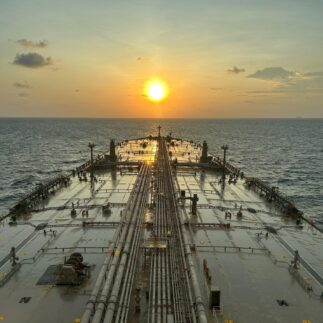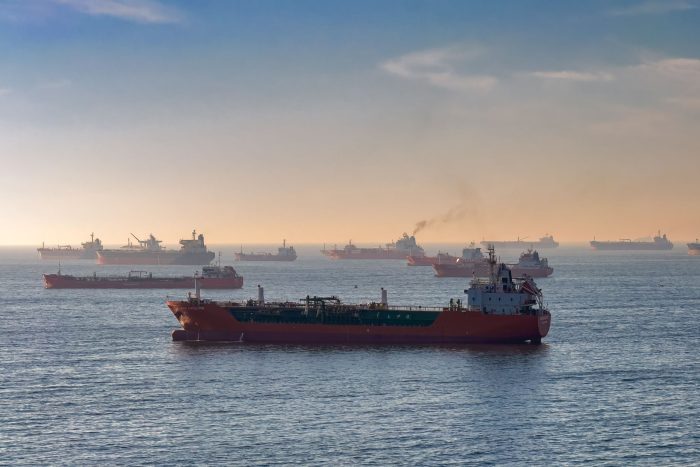
Kuwait and Qatar are moving larger volumes of crude through the Strait of Hormuz, contributing to a rebound in Gulf oil shipments that has helped contain global prices. The two countries exported a combined 2 million barrels a day before the Iran war began on Feb. 28. Traders said they have now restored flows to about 70 percent of those pre-conflict levels.
A total of around 7 million to 8 million barrels of oil a day is now exiting Hormuz, up from about 4 million barrels a day in mid-July, according to traders. That volume represents roughly three-quarters of pre-war levels. Vortexa put the seven-day average close to 10 million barrels a day as of Monday. Pre-war traffic through the strait carried about 20 million barrels a day of crude and products.
Qatar and Kuwait began shuttle operations around June and have increased volumes despite the risk of attacks. The method uses tankers willing to transit the strait to transfer cargoes to other vessels in the Gulf of Oman, limiting exposure of the wider commercial fleet. The United Arab Emirates pioneered the approach, followed by Saudi Arabia.
A Kuwait Petroleum Corp. supertanker was struck earlier in August while crossing the chokepoint, according to representations the country made to the UN shipping watchdog. QatarEnergy this week offered to sell crude on a ship-to-ship transfer basis outside Hormuz.
The rising volumes coincide with a stalemate between Washington and Tehran over the Iran war, with control of Hormuz the central point of disagreement. Brent crude traded near $87 a barrel, down from above $120 in late April.

Tracking discrepancies persist across data providers. Some recent readings placed oil flows through Hormuz as low as 5 million barrels a day on individual days, with commodity vessel transits falling to three-month lows of just two tankers on certain sessions. IMF PortWatch satellite data showed commercial transits running at about 4 percent to 7 percent of pre-crisis levels of roughly 85 vessels a day, with a seven-day average near five ships. AIS-dark movements and disabled transponders account for a large share of activity since July, making official counts incomplete. Separate estimates of total Gulf oil leaving the region, including pipelines, have been cited near 20 million barrels on isolated days, but visible tanker traffic through the strait itself remains far below the 2025 baseline of about 21.6 million barrels a day.
Kuwait lacks a dedicated bypass pipeline and depends almost entirely on Hormuz, unlike Saudi Arabia and the UAE. Its output dropped from 1.16 million barrels a day in March to 573,000 barrels a day in May before partial recovery. Qatar completed delivery of all pre-conflict LNG cargoes that were in transit when fighting started, after which new LNG flows through Hormuz remained stalled, with only isolated crossings recorded. Intra-Gulf sales of crude and products to Saudi Arabia, the UAE and Bahrain sustained some revenue for both countries during the tightest months. Qatar’s prime minister traveled to Tehran this week to discuss freedom of navigation and revival of talks. Forecasts from regional bodies project 2026 economic contractions of 2.9 percent for Kuwait and 5.9 percent for Qatar, the steepest among GCC states, because of their heavy reliance on Hormuz-dependent hydrocarbon exports. KPC committed to supplying term crude either via Hormuz or STS off Oman. War-risk insurance multiples have reached 40 times normal premiums, restricting most commercial operators.