Apple Inc. introduced updated Mac mini and Mac Studio desktop computers on Tuesday, incorporating major chip upgrades centered on artificial intelligence workloads. The Mac mini now offers the new M6 system-on-chip or the M5 Pro, while the Mac Studio ships with the M5 Max or the new M5 Ultra.
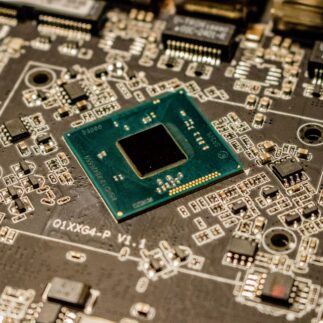
The M6 marks Apple’s first 2-nanometer process node chip for Macs. It includes a 12-core central processing unit with two super cores, four performance cores and six efficiency cores, plus a 12-core graphics processing unit and dual 16-core Neural Engine. Memory bandwidth reaches up to 170 gigabytes per second, with support for as much as 32 gigabytes of unified memory. Apple states the M6 delivers up to 40 percent faster multi-threaded performance than the prior M4 and up to four times faster AI performance.
The higher Mac mini configuration uses the M5 Pro chip, configurable to an 18-core CPU and 20-core GPU with up to 64 gigabytes of unified memory and 307 gigabytes per second of bandwidth. Both Mac mini variants add Wi-Fi 7, Bluetooth 6 and standard 2.5-gigabit Ethernet, with an optional 10-gigabit upgrade. Storage speeds double versus the previous generation.
The Mac Studio gains the M5 Max with an 18-core CPU, up to 40 GPU cores and as much as 128 gigabytes of unified memory at 614 gigabytes per second bandwidth. The top M5 Ultra configuration employs UltraFusion interconnect technology to combine two dual-die M5 Max chips into a quad-die design. It scales to a 36-core CPU with 12 super cores and 24 performance cores, an 80-core GPU and up to 512 gigabytes of unified memory at 1.2 terabytes per second bandwidth, a 50 percent increase over the prior M3 Ultra. Apple reports up to 1.25 times higher single-threaded and 1.3 times higher multi-threaded performance versus the M3 Ultra, along with up to 4.5 times peak GPU compute for AI tasks.
The Mac Studio also introduces PCIe Gen 6 solid-state storage architecture claimed to be twice as fast, Thunderbolt 5 ports delivering up to 120 gigabits per second, support for as many as eight displays and genlock over USB-C. Both new systems ship with macOS 27.
Pricing for the Mac mini with M6 starts at $899 with 16 gigabytes of memory and 256 gigabytes of storage. The M5 Pro configuration begins at $1,699. The Mac Studio with M5 Max starts at $2,499, and the M5 Ultra begins at $5,499 with 96 gigabytes of memory and 1 terabyte of storage. Pre-orders opened Tuesday, with customer deliveries and store availability scheduled for September 22. Configurations with 512 gigabytes of memory on the Mac Studio ship later in October.

Prior Mac mini and Mac Studio models faced inventory shortages amid elevated demand for local AI inference tasks.
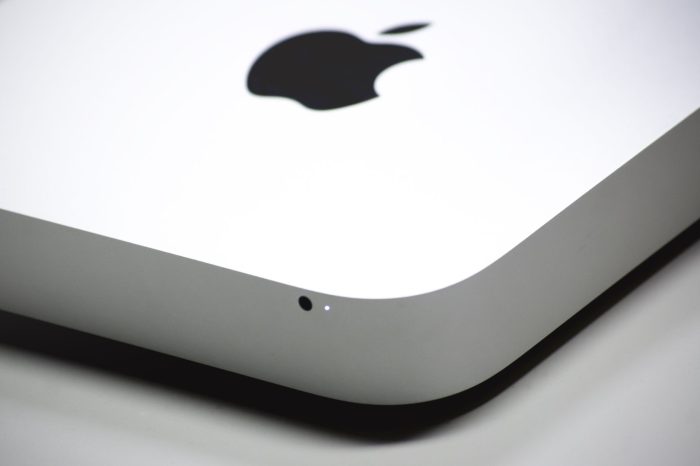
Although the announcement emphasizes major chip advances and AI gains, the base Mac mini price rose $100 to $300 from the prior generation’s starting points, and the Mac Studio base increased from $1,999. The M6 Mac mini remains limited to 32 gigabytes of unified memory, constraining larger local model workloads compared with the Studio’s 512-gigabyte ceiling. No external design changes occurred on either chassis.
The M6 is the first Apple Silicon chip to incorporate all three CPU core types simultaneously. The M5 Ultra represents Apple’s initial quad-die architecture, linking two dual-die M5 Max packages via UltraFusion with inter-die bandwidth exceeding 4.4 terabytes per second. Apple demonstrated linking multiple Mac Studios over Thunderbolt 5 to share memory for frontier large language models exceeding one trillion parameters. The systems also include updated Magic Keyboards and a lower-priced Polishing Cloth released concurrently.