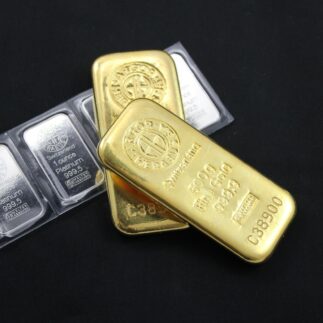
Gold traded around $4,050 an ounce on Monday after ending the prior session 0.2% higher, moving within a narrow band as market participants tracked developments in Middle East negotiations. The metal hovered near levels seen in recent sessions, with spot prices reported in the $4,050 to $4,070 range during Asian and early trading hours. US gold futures showed limited movement in parallel. The stability followed a weekend pause in planned US military action against Iran, with President Donald Trump stating that talks would focus first on reopening the Strait of Hormuz and later on denuclearization issues.
Trump described the discussions as Iran’s “last chance” after calling off what he characterized as a major strike, citing outreach from Saudi Arabia, the United Arab Emirates and Qatar. Iranian officials denied direct negotiations with the United States, stating that contacts were limited to Oman on establishing a temporary shipping route through the strait to facilitate vessel traffic. The waterway, which handled about one-fifth of global oil supplies before the conflict that began with US and Israeli strikes on February 28, has seen restricted commercial flows during the six-month war. Oil prices had declined nearly 5% earlier on the diplomatic signals before stabilizing.
The Federal Reserve held its benchmark rate in the 3.50%-3.75% range at its most recent meeting, with three regional presidents dissenting in favor of a 25-basis-point increase. Traders have priced elevated odds of further tightening later in the year, linked in part to energy costs that rose during periods of heightened hostilities. Higher borrowing costs increase the opportunity cost of holding non-yielding bullion. Gold posted a 1% gain for July, its first monthly advance since February, after earlier declines of more than 20% from pre-conflict peaks near $5,600.
While market narratives often link Middle East de-escalation primarily to reduced safe-haven demand that would pressure gold lower, the dominant channel in recent price action has run through oil and inflation expectations. Progress toward restoring Hormuz transit has previously coincided with softer crude prices that lower the probability of additional Fed hikes, providing offsetting support for bullion. Iranian statements limiting talks to bilateral Oman discussions on maritime logistics, rather than broader US engagement or nuclear matters, have not produced a sharp reversal in gold despite the public divergence from Trump’s description of the process.

July’s modest monthly gain occurred even as the Fed’s policy meeting featured the strongest internal dissent in a decade under Chair Kevin Warsh. Spot prices briefly tested levels near $4,000 during July before reclaiming the threshold, with trading volumes and ranges remaining compressed in the immediate aftermath of the latest diplomatic signals. Central bank purchases and physical market activity have continued to provide a floor in prior periods of geopolitical and monetary cross-currents, though specific weekly positioning data for the current session remains pending.