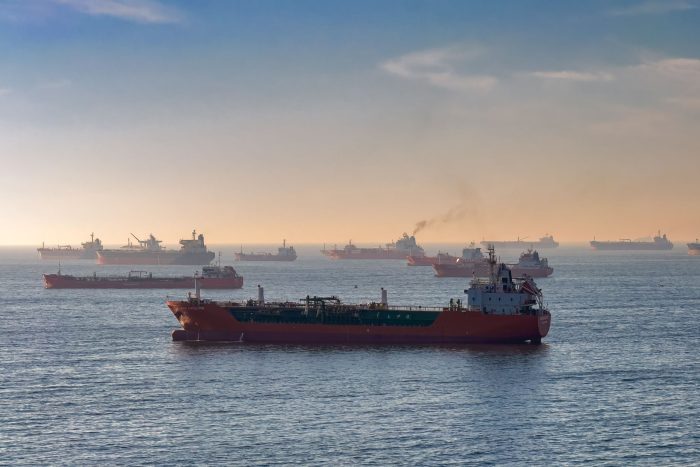
US crude oil is attracting heightened interest from overseas refiners in Asia and Europe as geopolitical tensions expand from the Persian Gulf to the Black Sea. Ship-tracking data and official reports show sustained elevated export volumes from Gulf Coast terminals, with buyers securing alternative barrels after disruptions tied to the US-Iran conflict and Ukrainian operations against Russian energy infrastructure.
The US-Iran hostilities, which began with strikes on February 28, 2026, initially curtailed flows through the Strait of Hormuz, a route that typically carries about 20 percent of global seaborne oil. Middle East production shut-ins reached peaks above 11 million barrels per day in May before partial recovery. In early July, renewed US strikes and related measures further constrained Iranian exports and tanker movements, according to International Energy Agency assessments released July 10. Concurrently, Ukrainian drone and missile attacks have disrupted Russian Black Sea loadings and refinery operations, reducing product exports and affecting pipeline flows that include Kazakh volumes.
Kpler vessel-tracking figures placed US crude exports at a record 5.6 million barrels per day in May 2026, exceeding the prior April mark of approximately 5.2 million barrels per day. Asia accounted for roughly 2.45 million barrels per day of those May shipments, led by Japan at 808,000 barrels per day, while Europe took about 2.4 million barrels per day. Destinations included first-time or rare purchasers such as Greece, Bulgaria, Croatia and Turkey. Energy Information Administration data confirmed April total US petroleum exports, crude plus products, at a record 13.6 million barrels per day, with crude alone averaging 5.6 million barrels per day. Net US crude imports approached near-zero levels in some weekly periods in the spring, the lowest in records dating to 2001.
By mid-July, weekly EIA figures showed crude exports fluctuating between 3.3 million and 4.0 million barrels per day, remaining above pre-conflict averages even as some Hormuz traffic resumed following a June memorandum of understanding. Refiners in Northwest Europe and East Asia continued to book US grades, including WTI Midland and other light sweet crudes, to replace heavier Middle East barrels and offset Black Sea shortfalls. US distillate and jet fuel exports also set records in the second quarter, averaging 1.56 million barrels per day for distillates, 30 percent above the five-year average.
Commercial crude inventories in the United States declined through the second quarter to seasonal lows last seen in 2014, driven by the combination of high exports and elevated domestic refinery runs. Global observed stocks fell by 3.8 million barrels per day since the start of the Iran conflict, with OECD inventories reaching their lowest since 2003 at points during the year.
While coverage emphasizes surging US exports as a direct response to war-driven shortages, IEA and EIA data show global oil demand contracting by about 1 million to 1.2 million barrels per day in 2026, the first annual decline since 2020. The drop is concentrated in Asia, where Chinese seaborne crude imports fell by as much as 3.6 million barrels per day from February to April. Higher prices and physical disruptions have destroyed demand in transportation and industrial sectors, offsetting some of the supply loss. Gulf production recovered by 3.5 million barrels per day in June as floating storage and onshore inventories were drawn down, and total Gulf exports rose 6.5 million barrels per day that month, though still 11.4 million barrels per day below pre-war levels. Forecasts from both agencies project a potential market surplus in 2027 if flows normalize, with US export growth constrained by pipeline and terminal capacity limits that emerged as loadings approached practical maxima in the spring.

Weekly EIA data for the period ending July 17, 2026, recorded US crude exports at 3.353 million barrels per day, down from 3.721 million the prior week yet still reflecting sustained overseas pull. Corpus Christi handled roughly half of April loadings, with Houston accounting for most of the remainder, according to Kpler. Greece acquired US crude for the first time in recent months, while Mediterranean and Black Sea-bound volumes set records in May. Atlantic Basin exporters overall, including the United States, Brazil and Canada, increased shipments to East of Suez markets by 3.5 million barrels per day since February. US net petroleum exports averaged near 5.8 million barrels per day in April, the highest on record, and are projected by the EIA to average 4.2 million barrels per day for the full year, up 1.4 million from 2025. Strategic petroleum reserve releases by IEA members totaled more than 400 million barrels early in the conflict, providing a temporary buffer that has since largely been exhausted.
Enjoyed this article? Access prime market insights combined with ready-to-use chart frameworks with training content to apply on any market anytime by investing in a membership.