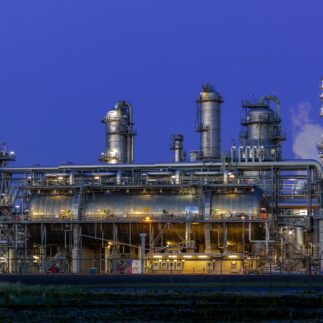
Global refining utilization has dropped with about 8 million barrels per day offline, pushing West Texas Intermediate crack spreads to around $59 per barrel and lifting margins for integrated operators.
US crude futures climbed near $80 a barrel as supply disruptions from the Iran conflict and other outages tightened product markets. Refining margins reached approximately $60 per barrel, with the WTI crack spread hitting $59 and peaking at $64 in recent sessions, levels nearly triple early 2026 averages and well above the historical norm near $10. Companies including Marathon Petroleum and Valero captured gains as gasoline, diesel, and jet fuel prices outpaced feedstock costs.
Roughly 10% of global refining capacity remains offline, equivalent to 8 million barrels per day. Factors include Ukrainian drone strikes that reduced Russian output to two-decade lows and damage to Middle East facilities such as Saudi Arabia’s Ras Tanura complex amid the Iran war. Low inventories compounded the tightness amid peak summer demand.
Product cracks widened as refinery maintenance and geopolitical events limited throughput. Integrated energy names benefited while standalone refiners saw margins expand sharply. Consumers faced elevated pump prices for transportation fuels.

Mainstream coverage often frames the price rise as purely crude-driven, yet the outsized move in crack spreads reflects downstream bottlenecks rather than upstream shortages alone. Russian output cuts and Middle East damage have disproportionately idled refining capacity, with recovery not anticipated until 2027, extending the margin boom beyond typical seasonal patterns despite WTI levels that remain below some prior peaks.
Damage to specific facilities like Ras Tanura has removed complex upgrading capacity that processes heavier grades, amplifying light product shortages. Historical parallels from earlier disruptions show similar multi-quarter margin elevations when utilization falls below 85% globally. Some independent refiners have quietly maximized exports of distillates to Europe and Asia, capturing arbitrage that domestic headlines understate.