
The S&P 500’s 0.2% decline and Nasdaq’s 0.4% loss highlight the market’s sensitivity to earnings guidance and sector-specific challenges. Adobe’s significant drop (-11%) on weak revenue guidance underscores the vulnerability of tech stocks to growth concerns.
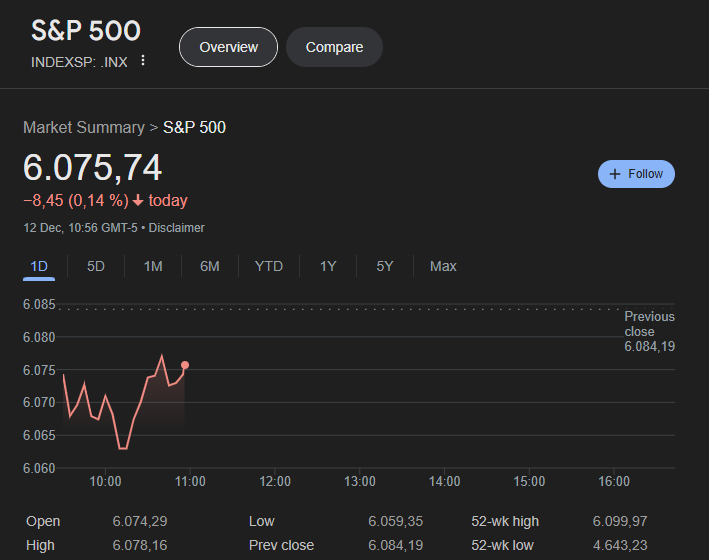
Nvidia (-2%) and other major tech names, including Amazon, Meta, and Tesla, weighed heavily, reflecting a broader rotation out of growth sectors as interest rate expectations evolve.
The unexpected rise to 242K, well above the forecasted 220K, signals potential softening in the labor market, reinforcing expectations for a dovish Federal Reserve stance.
While the headline PPI surprised to the upside, the core index’s deceleration aligns with expectations, maintaining confidence in the Fed’s rate-cut trajectory.
The odds for a 25bps rate cut next week are firmly priced at 95%-98%, reflecting broad consensus. Markets are also positioning for 150bps of total cuts in 2025, driven by expectations of slower economic activity.
The yield’s drop to 4.28% highlights increased demand for safe-haven assets amid labor market concerns. However, its proximity to two-week highs reflects lingering inflation risks from the higher PPI print.
The dollar’s stability around 106.8 reflects its resilience against the euro and appreciation versus the Swiss franc after a 50bps SNB rate cut, larger than anticipated.
The ECB’s 25bps rate cut aligns with market expectations, reinforcing dovish trends across major central banks. Divergence in policy approaches, such as the SNB’s unexpected 50bps cut, highlights varying economic pressures globally.
Strategic Implications for Investors
- Equity Markets:
- Sector Rotation: The weakness in technology, particularly after Adobe’s guidance, suggests a shift toward value or defensive sectors like healthcare and utilities, which are less sensitive to rate changes and economic uncertainties.
- Earnings Sensitivity: Companies with high valuations or weak guidance remain vulnerable. Focus on sectors with stable earnings and robust balance sheets as rate cuts take effect.
- Fixed Income:
- Opportunities in Bonds: Declining Treasury yields present opportunities in fixed income, particularly in short- and intermediate-duration bonds. Higher expected rate cuts in 2025 enhance the attractiveness of longer-dated securities.
- Credit Markets: Investment-grade bonds and high-quality corporate debt may benefit from easing financial conditions, while caution is warranted in lower-grade credit amid potential economic slowing.

- Currency and Global Diversification:
- USD Strength: A stable dollar provides a strong base for U.S. asset allocations, though the relative weakness against the euro and yen suggests hedging opportunities for international portfolios.
- Eurozone Exposure: With the ECB maintaining a dovish path, opportunities may arise in European equities, particularly exporters benefiting from a stable-to-weak euro.
- Commodities and Inflation Protection:
- Inflation Hedges: Persistent inflation risks, as suggested by the headline PPI, keep gold and other real assets attractive as hedges against any upside inflation surprises.
Monitoring Points
- Fed Communication: Pay close attention to the Federal Reserve’s guidance next week regarding the magnitude and timing of rate cuts in 2025.
- Economic Data: Upcoming labor market reports and consumer confidence indices will be critical in assessing economic resilience and the Fed’s policy outlook.
- Corporate Earnings: Guidance updates from major firms, particularly in tech and consumer discretionary, will provide further insight into market sentiment and sector rotation trends.
Enjoyed this article? Access highly trusted educational content and prime market research by investing in a membership to become part of our community.








