
The energy market remains finely balanced, with prices influenced by mixed global factors, including Chinese economic recovery, OPEC+ policy expectations, geopolitical risks, and seasonal demand dynamics. Below is our perspective:
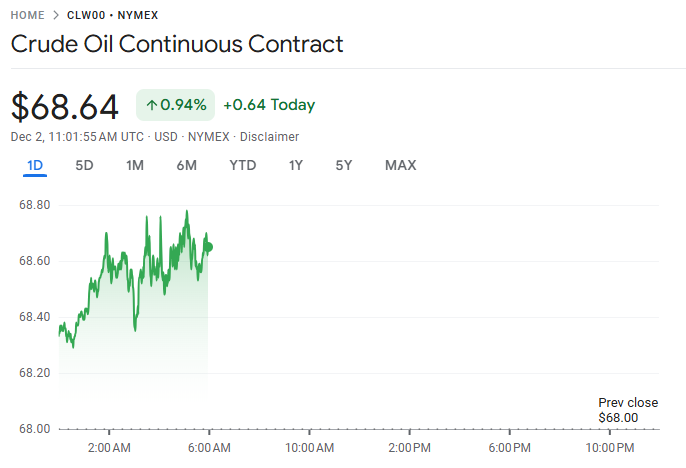
WTI crude prices stabilizing at $68.5 per barrel reflect a tug-of-war between bullish signals from China’s economic recovery and bearish factors such as potential oversupply and Saudi Arabia’s price cuts for Asian buyers.
The Caixin PMI’s strongest reading in five months indicates improving demand from China, the world’s largest oil importer, following stimulus efforts. However, Saudi Arabia’s anticipated price reductions for January deliveries suggest weak regional demand and intensifying competition for market share.
The delayed OPEC+ meeting is critical, as the group is likely to postpone planned production increases, reflecting efforts to support prices amid global oversupply concerns.
Renewed hostilities in the Middle East, including Israel’s attacks on Lebanon and Iran’s pledge of support to Syria, inject a geopolitical risk premium into oil prices. However, the ceasefire between Israel and Hezbollah could limit further price escalation if it holds.
U.S. natural gas futures fell below $3.20/MMBtu after November’s 20% rally, as forecasts for milder weather in mid-December reduced heating demand expectations. Robust U.S. production at 101.5 bcfd and disciplined output strategies from producers signal longer-term market balance.
While near-term weather is driving price pullbacks, rising LNG exports in 2025 are expected to increase demand, supporting a constructive long-term outlook for natural gas markets.
Gasoline futures dropped to $1.92 per gallon, the lowest since September, following a surprising inventory build of 3.3 million barrels, against expectations for a draw. This oversupply reflects weaker seasonal demand and aligns with declining crude prices.
Heating oil prices at $2.20 per gallon are under pressure from lower natural gas prices and a weaker dollar, making dollar-priced commodities more affordable globally while contributing to temporary domestic oversupply. The competition between natural gas and heating oil in the residential heating market has intensified, driving substitution effects.
Strategic Implications:
Remain cautiously optimistic about crude oil prices in the short term, supported by OPEC+ supply management and geopolitical risks. However, monitor China’s demand trajectory and Saudi price strategies closely, as these could significantly influence market dynamics.

Tactical allocations to energy equities with strong balance sheets and efficient cost structures may offer opportunities to benefit from price stability.
The recent pullback in natural gas prices offers a potential entry point for longer-term investors, particularly given the outlook for rising LNG demand in 2025. However, near-term caution is warranted due to weather-driven demand volatility and robust supply.
Weak gasoline and heating oil prices highlight the impact of oversupply and competition. Investors should consider reduced exposure to refining and distribution segments heavily reliant on stable crack spreads. Monitoring inventory trends and seasonal demand shifts will be critical for refining sector strategies.
A weaker U.S. dollar enhances the attractiveness of dollar-priced commodities for foreign buyers, potentially supporting exports. Geopolitical risks in the Middle East remain a wildcard, requiring close attention to developments that could disrupt supply or alter market sentiment.
Like this article? Access highly trusted educational content and prime market research by investing in a membership.








