
Given the current pressures on copper markets, our perspective leans on a cautious approach, as weak economic signals from China, combined with a strong U.S. dollar, dampen copper demand prospects in the near term.
Copper’s recent slide below $4.20 per pound reflects ongoing concerns about China’s economic softness, with data showing a significant reduction in new loans and underwhelming consumer inflation and producer prices. The recent 10 trillion yuan debt package aimed at easing local government financing failed to deliver the direct stimulus that markets had anticipated. This suggests limited short-term support for industrial metals from China, the world’s largest copper consumer, as economic headwinds persist.
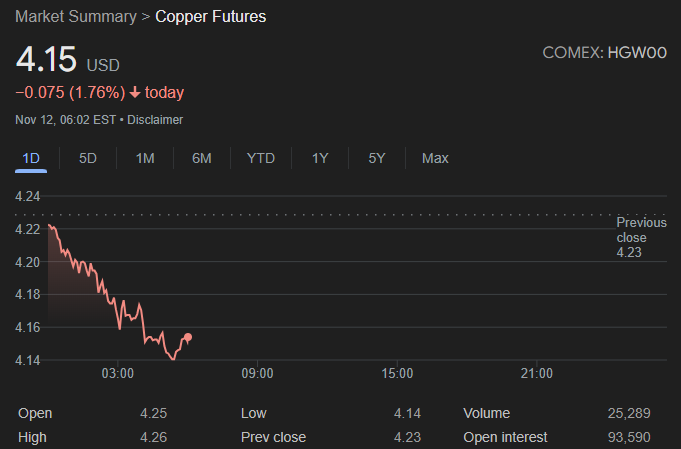
The dollar’s recent strength, driven by expectations of strong U.S. growth under Trump’s re-election, has added downward pressure on dollar-denominated commodities like copper. With a higher dollar making copper more expensive for international buyers, demand could remain constrained in key global markets, especially if U.S. growth expectations and interest rates continue to support the dollar.
Although copper has longer-term demand drivers from green energy and infrastructure projects, near-term headwinds are likely to weigh on prices. Industrial metals may remain under pressure if Chinese stimulus continues to underwhelm, as the market has priced in expectations of a more robust economic recovery from China.
Strategic Implications:
In light of weaker-than-expected demand signals from China and a stronger dollar, a cautious stance on copper is advisable. Reducing exposure to copper in the near term may help manage downside risk, particularly if further data reinforces economic weakness in China.
Investors should remain attentive to any shifts in Chinese fiscal and monetary policies that could signal stronger economic support. Clear signs of a more direct economic stimulus could provide a catalyst for copper demand and prices, so monitoring policy developments will be critical for recalibrating positions.

With the dollar showing strength on U.S. growth expectations, investors with copper exposure should consider currency hedging strategies to manage currency risk and potential volatility in dollar-denominated commodities.
The weaker-than-anticipated economic data from China and the strong U.S. dollar create a challenging environment for copper in the near term. A cautious approach to copper exposure, combined with vigilant monitoring of policy developments and potential currency hedging, will help manage risk and position portfolios effectively amid current headwinds.
Enjoyed this article? Access highly trusted educational content and market research by investing in a membership.








