
Given the recent developments in European equities and economic data, our perspective emphasizes a cautious yet selectively optimistic outlook on European markets, shaped by solid corporate earnings, a mixed economic landscape, and evolving ECB expectations.
Key Points to Address:
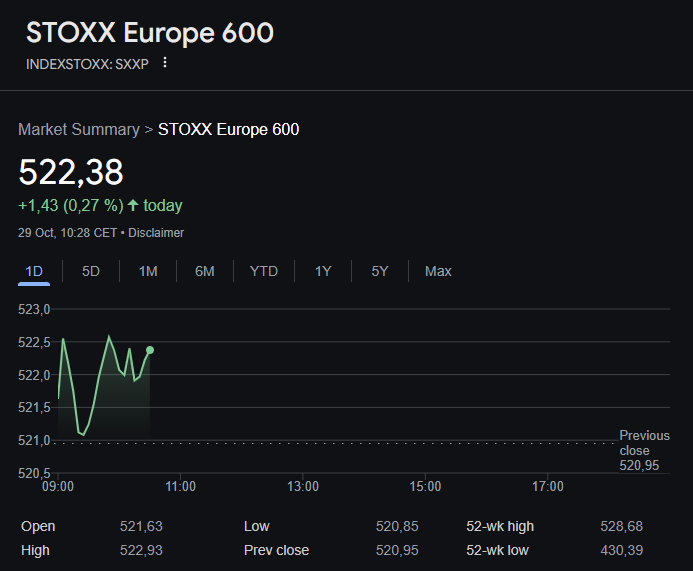
- Corporate Earnings and Sector Performance: European stocks are extending gains, with the STOXX 50 and STOXX 600 posting modest increases. Strong earnings from key players like HSBC and Adidas signal resilience in financials and consumer goods. HSBC’s robust profit and revenue beat, coupled with its $3 million share buyback, reflects underlying strength in banking, despite macroeconomic headwinds. Similarly, Adidas’s 71% profit surge, supported by increased sales in China, highlights demand recovery in consumer goods. However, mixed results from companies such as Novartis, BP, Banco Santander, and Lufthansa reveal sector-specific vulnerabilities. Novartis’s underperformance, despite its upwardly revised guidance, suggests that expectations are high, and any shortfall in sentiment-sensitive sectors could weigh on investor confidence. Meanwhile, BP’s weakest quarterly earnings in four years and declines in Banco Santander and Lufthansa reflect pressures in energy, financials, and transportation.
- German Consumer Sentiment and Eurozone Growth: The GfK Consumer Climate Indicator for Germany exceeded expectations, marking a steady recovery in consumer sentiment for November. However, a third consecutive decline in Germany’s long-term economic expectations underscores persistent challenges in Europe’s largest economy, which remains vulnerable to recession risks. The upcoming Eurozone Q3 GDP report is expected to show modest growth, with France and Italy forecasted to expand, but Germany anticipated to contract by 0.1%. This divergence within the Eurozone highlights the uneven nature of recovery across the bloc.
- Inflation and ECB Rate Cut Expectations: The euro’s slight appreciation, rebounding from a four-month low, reflects investors’ anticipation of upcoming inflation and growth data that may influence ECB policy. Eurozone inflation is expected to rise to 1.9%, close to the ECB’s 2% target, driven largely by German inflation at 1.8%. With inflation concerns receding, expectations for further ECB rate cuts are gaining momentum. Market projections suggest the ECB’s deposit rate could fall to 2% by mid-2025, with another rate cut expected in December. The size of the cut remains uncertain, with the ECB carefully balancing inflation control with economic growth considerations.
- German 10-Year Bund Yields and Investor Sentiment: The German 10-year Bund yield’s rise above 2.33%, approaching an eight-week high, reflects anticipation of key economic data that could shape ECB monetary policy. Improved investor sentiment following Israel’s restrained strikes on Iran, which avoided critical infrastructure, has alleviated immediate geopolitical risks, providing support for risk assets in Europe.
Strategic Implications:

- Selective Equity Exposure: With mixed corporate earnings across sectors, a selective approach to European equities is warranted. Positive earnings from financials and consumer goods, such as HSBC and Adidas, suggest opportunities in resilient sectors. However, underperformance in energy and transportation signals the importance of cautious sector allocation. Focus on high-quality, cash-flow-generating companies with robust fundamentals in sectors demonstrating strong demand recovery, such as select financials, consumer goods, and industrials.
- Fixed Income Positioning: The German 10-year Bund yield’s recent increase signals investor expectations for ongoing economic resilience and potential ECB rate adjustments. With the ECB likely to cut rates further in response to declining inflation expectations and uneven growth, fixed-income portfolios may benefit from an allocation to Eurozone sovereign debt. Shorter-duration bonds may offer stability, especially given persistent economic challenges in Germany and potential recessionary pressures across parts of the Eurozone.
- Currency Considerations: The euro’s recent rebound from multi-month lows reflects investor positioning ahead of key Eurozone economic data. While currency appreciation could pressure European exporters, any sustained strength in the euro may hinge on further ECB rate adjustments. Investors with significant exposure to European assets may consider currency hedging strategies, particularly if ECB policy diverges from expectations.
- Monitoring Political and Geopolitical Risks: The easing of geopolitical tensions following Israel’s measured response to Iran has provided relief to risk assets. However, geopolitical risks remain, and further escalations could introduce volatility. Staying vigilant on developments in the Middle East and European political landscape will be essential to managing downside risks.
Enjoyed this article? Access highly trusted educational content and market research by investing in a membership to become part of our community.








