
Following a hotter-than-expected Consumer Price Index (CPI) report for September, U.S. stocks saw declines as investors reassessed the likelihood of Federal Reserve rate cuts. Wall Street reacted swiftly to the news, with the S&P 500 sliding and Bitcoin prices falling to $61,000. The report has added complexity to the Federal Reserve’s rate strategy, fueling concerns that inflation may persist longer than anticipated.
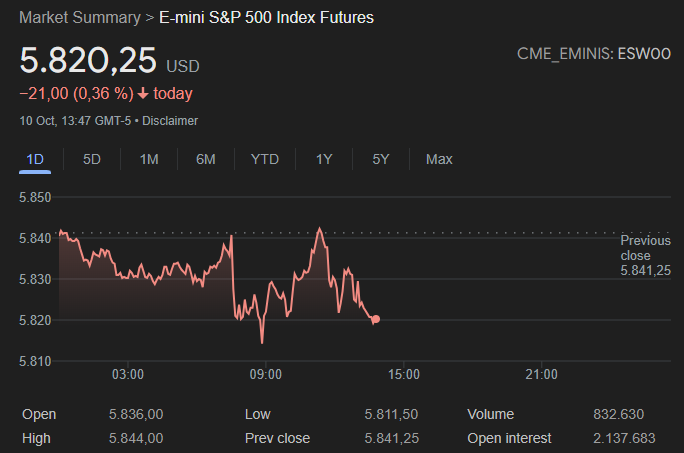
Inflation and Employment Data Shape Market Sentiment
The higher CPI reading has cast doubts on the possibility of an imminent rate cut. While the Federal Reserve has signaled a gradual approach to rate reductions, today’s data suggests that inflation remains stubborn. Complicating the picture are recent jobless claims, which spiked unexpectedly, signaling potential weakness in the labor market. These factors contribute to a clouded economic outlook as markets attempt to balance inflationary pressures with signs of a cooling job market.
Tech Sector: AMD and Super Micro Computer Under Pressure
The tech sector is feeling the pinch, particularly with AMD’s recent AI product event. Analysts labeled the event as a “fade-the-news” moment, resulting in a tepid response from investors. Super Micro Computer also continues to experience volatility, with investors weighing AI hype against reports of a potential DOJ investigation. This caution reflects broader market unease as tech stocks face headwinds from both economic and regulatory challenges.
Global Economic and Political Developments Add to Uncertainty
International developments are further contributing to market uncertainty. Russia is urging its BRICS partners to develop an alternative to the International Monetary Fund (IMF), a move that could have implications for global financial stability. At the same time, the Bank of Japan (BOJ) indicated a potential rate hike if current economic projections materialize, signaling a shift in its traditionally dovish stance.
In Europe, geopolitical tensions escalated as Israel reportedly fired on UN peacekeeper positions in southern Lebanon. France has demanded an explanation, underscoring the fragile state of Middle Eastern geopolitics. These events add another layer of complexity to an already volatile global economic environment.
Corporate Sector: Pfizer, TD Bank, and Trump’s Proposed Tax Deduction
In the corporate world, Pfizer finds itself embroiled in a heated battle with hedge fund Starboard, which has accused the pharmaceutical giant of executive pressure tactics. Meanwhile, TD Bank is reportedly set to admit guilt and face an asset cap in a money-laundering probe. Additionally, former President Trump has proposed making car loan interest tax-deductible, a move that could have broad implications for the automotive and finance sectors.

The business landscape remains dynamic, with companies navigating regulatory challenges, economic shifts, and changing consumer preferences. Birkenstock, for instance, is preparing for growth, with analysts expressing optimism about its prospects. On the other hand, TD Bank faces potential financial and reputational impacts due to ongoing legal challenges.
Investor Takeaways: Navigating a Complex Environment
With the recent inflation data dampening hopes for a quick rate cut, investors should brace for continued market volatility. Safe-haven assets like gold may become more attractive as uncertainty persists. At the same time, sector-specific developments, particularly in tech and finance, will require careful monitoring. The potential for international disruptions, such as shifts in BRICS alliances or geopolitical tensions in the Middle East, further underscores the need for a diversified investment strategy.
The interplay between inflation, labor market data, and geopolitical developments paints a complex picture for investors. As the Federal Reserve grapples with persistent inflation and job market fluctuations, and as global political events unfold, the coming months will be critical for market participants.








