
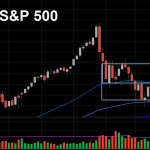
US stock futures trended lower on Thursday, reflecting investor caution following a higher-than-expected consumer inflation report and in anticipation of the upcoming producer price index (PPI) data. The market’s response to Wednesday’s trading session saw significant declines across major indices: the Dow Jones Industrial Average dropped by 1%, the S&P 500 fell by 0.95%, and the Nasdaq Composite decreased by 0.84%. Sector-wise, real estate, utilities, and materials led the downturn, with ten out of the eleven S&P sectors finishing in the red.
Notably, tech giants such as Tesla, AMD, and Apple experienced sharp sell-offs, attributing to the market’s reaction to March’s robust inflation data, which has tempered expectations for the Federal Reserve’s interest rate cuts. Originally anticipating three rate cuts this year, the market has now adjusted its outlook to foresee only two, influenced by the inflation reading and a surge in Treasury yields, with the 10-year yield crossing the 4.5% threshold.
Amid these developments, the dollar index has surged, maintaining near five-month highs above the 105 mark after a 1% rally in the previous session. This rally is largely due to March’s US inflation rate acceleration to 3.5%, marginally above the anticipated 3.4%, while the core inflation rate remained at 3.8%, contrary to expectations for a decrease to 3.7%. Both the overall and core inflation rates on a monthly basis exceeded forecasts, increasing by 0.4% against a projected 0.3%.
Investors are now turning their focus towards the producer price index report slated for release on Thursday, seeking further clarity on inflationary pressures. The current market consensus suggests the Federal Reserve might pause interest rate adjustments in June, with a recalibrated expectation of only two rate cuts this year, as opposed to the previously anticipated three.
This backdrop of heightened inflation concerns, alongside the anticipation of first-quarter earnings reports from major banks on Friday, shapes a critical moment for investors. The strength of the dollar, particularly against the Australian and New Zealand dollars, underscores the global ramifications of the US inflation data and Fed policy expectations.
In light of the recent inflation data and its potential implications on Federal Reserve policy, investors and traders might consider several strategic approaches to navigate the current market dynamics effectively. These scenarios encompass a range of asset classes, including equities, fixed income, and currencies, reflecting a comprehensive view of potential opportunities and challenges arising from the inflationary landscape and the Federal Reserve’s anticipated actions.
1. Equity Sector Rotation Strategy:
Given the pressure on tech giants and the broader market downturn influenced by inflation concerns, investors may explore opportunities in sectors less sensitive to interest rate fluctuations, such as consumer staples or healthcare. These sectors often offer stability during periods of economic uncertainty and could present a safer haven as the market adjusts to the Federal Reserve’s rate decisions.
2. Fixed Income Adjustment:
The surge in Treasury yields, particularly the benchmark 10-year yield crossing the 4.5% threshold, suggests a reevaluation of fixed income portfolios may be prudent. Investors could consider short-duration bonds or inflation-protected securities (TIPS) to mitigate interest rate risk and inflation erosion, respectively, maintaining a balanced approach to income generation and capital preservation.
3. Diversification with Commodities:
Commodities often serve as a hedge against inflation. With inflation rates exceeding expectations, adding commodities such as gold, which typically maintains value in inflationary periods, or energy commodities, which have seen price support from OPEC+ actions, could diversify portfolios and protect against inflationary pressures.
4. Currency Trading Opportunities:
The dollar’s strength, particularly in the wake of the inflation report and subsequent market reaction, highlights potential trading opportunities in the forex market. Traders might consider positions that capitalize on the dollar’s gains against currencies like the Australian and New Zealand dollars, especially as differential interest rate expectations between the Federal Reserve and other central banks become clearer.
5. Defensive Stocks and Dividend Yielders:
In an environment where inflation concerns may limit the scope of Federal Reserve rate cuts, investors might seek refuge in defensive stocks known for stable earnings and strong dividend yields. Utilities and consumer goods companies often fit this profile, offering potential for steady returns amidst market volatility.
6. Monitoring Earnings Season for Bank Stocks:
With major banks set to report their latest results, keen attention to their earnings and forward-looking statements could unveil insights into the financial sector’s health and profitability outlook. Given the banks’ sensitivity to interest rate changes, these reports might offer early signals on how the sector could fare amid evolving economic conditions.
7. Tactical Allocation to Real Estate Investment Trusts (REITs):
While real estate was among the sectors leading the downturn, certain REITs, especially those focused on sectors with resilient demand such as industrial or healthcare facilities, might offer attractive opportunities. These investments can provide income through dividends and potential for capital appreciation, albeit with careful consideration of the interest rate impact on financing costs and valuations.
Enjoyed this article? Access highly trusted educational content and expand your horizon towards advanced wealth creation with investing in a membership.








