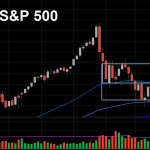
U.S. Stock Market Fluctuations: Major U.S. stock indices relinquished early gains, influenced by a temporary easing in bond market pressures and a mixed bag of corporate earnings reports.
Sector Performance: Materials and real estate sectors outperformed, while technology and communication services sectors faced declines.
Earnings Highlights: Eli Lilly, Apple, Meta, and Alphabet posted positive movements, with Palantir Technologies notably surging after a promising profit outlook.
Monetary Policy and Currency Movements: The euro’s depreciation against the dollar reflects revised expectations for Federal Reserve and European Central Bank (ECB) rate adjustments.
Detailed Analysis:
Corporate Earnings Impact: The latest earnings season has provided a diverse set of outcomes, influencing sector-specific stock performance and overall market sentiment.
Currency Market Dynamics: The euro’s continued weakness against the dollar underscores market recalibrations of monetary policy expectations in the U.S. and Eurozone.
Bond Market Trends: The slight retreat in the U.S. 10-year Treasury yield follows a significant prior rally, highlighting the ongoing reassessment of rate cut expectations based on economic indicators and Federal Reserve commentary.
Conclusions:
Earnings Season Monitoring: Investors should closely follow ongoing corporate earnings releases for insights into sector trends and individual company performance.
Currency and Monetary Policy Watch: Developments in currency markets and central bank communications remain critical to understanding investment landscape shifts.
Interest Rate Outlook: Given the Federal Reserve’s cautious stance on rate cuts, a focus on economic data releases will be vital for anticipating future monetary policy directions.
Balanced Investment Approach: The mixed market signals underscore the importance of a balanced and diversified investment strategy, considering both sectoral strengths and potential vulnerabilities.
Scenario 1 – Continued Market Volatility: Further divergence in corporate earnings outcomes and economic data releases may sustain current levels of market volatility.
Scenario 2 – Monetary Policy Clarity: Clarification from central banks, particularly the Federal Reserve and ECB, regarding their monetary policy plans, could influence market directions.
Scenario 3 – Economic Resilience Impact: Strong economic indicators reinforcing the U.S. economy’s strength may temper expectations for immediate rate cuts, affecting both equity and bond markets.
Join millions of others and stay up to date with the latest developments.
[mc4wp_form id="682"]
We use cookies on our website to give you the most relevant experience by remembering your preferences and repeat visits. By clicking “Accept”, you consent to the use of ALL the cookies.
This website uses cookies to improve your experience while you navigate through the website. Out of these cookies, the cookies that are categorized as necessary are stored on your browser as they are essential for the working of basic functionalities of the website. We also use third-party cookies that help us analyze and understand how you use this website. These cookies will be stored in your browser only with your consent. You also have the option to opt-out of these cookies. But opting out of some of these cookies may have an effect on your browsing experience.
Necessary cookies are absolutely essential for the website to function properly. This category only includes cookies that ensures basic functionalities and security features of the website. These cookies do not store any personal information.
Any cookies that may not be particularly necessary for the website to function and is used specifically to collect user personal data via analytics, ads, other embedded contents are termed as non-necessary cookies. It is mandatory to procure user consent prior to running these cookies on your website.