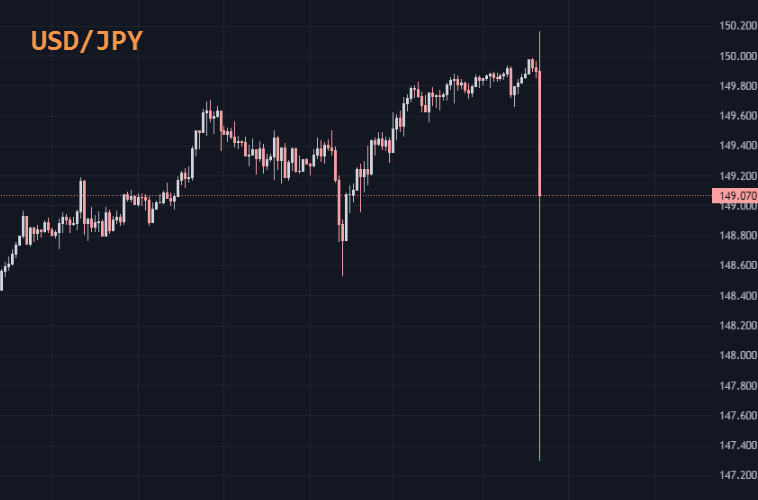
- Japanese yen surges to 147.5 per dollar after briefly touching 150.
- Strong performance attributed to a robust JOLTs report.
- Speculation of Bank of Japan (BoJ) intervention arises.
- Finance Minister Shunichi Suzuki expresses vigilance over currency movements.
- BoJ previously conducted yen purchases in 2022, first time since 1998.
- Currency weakened due to BoJ’s continued ultra-easy monetary policy.
- BoJ maintains dovish stance in September meeting, disappointing expectations of policy shift.
- Summary of BOJ’s last meeting reveals discussions on factors for exiting ultra-loose policy.
The intervention of the Bank of Japan in the USD/JPY currency pair is likely due to the unexpected increase in job openings in the United States. This positive jobs data would typically be seen as a bullish signal for the US dollar.
Central banks, including the Bank of Japan, may intervene in the foreign exchange market to influence the value of their currency relative to another currency, in this case, the US dollar against the Japanese yen. Such interventions are often carried out to maintain economic stability or to address concerns about the exchange rate’s impact on the domestic economy.
The positive US jobs data may prompt the central bank FED to consider maintaining interest rates at their current levels for a longer duration than previously expected. This possible scenario aims to help cool down the rapid economic growth and address inflationary pressures. As a result of this, stock markets experienced a decline, while the value of the US dollar strengthened.

The positive job data in the United States had the potential to impact the current tightening cycle in the US, leading to a stronger US dollar. In response to this situation, the Bank of Japan acted promptly to prevent a significant weakening of the Japanese yen against the dollar.