
- Copper futures slid to their lowest point in four months, nearing the $3.8 per pound mark, as subdued demand outweighed concerns over tight supply dynamics.
- Disappointing economic data revealed that the Chinese economy’s reopening did not meet expectations of a robust recovery, as April’s PMI figures unexpectedly contracted.
- Low industrial demand led to a 12.5% reduction in copper imports by the world’s second-largest economy during the period, totaling 407,294 tonnes compared to the previous year.
- Despite the demand challenges, copper prices remained relatively buoyant, supported by tight supplies. Copper inventories at the Shanghai Futures Exchange hit their lowest point this year, while those at the London Metal Exchange reached their lowest level since 2005.
- Chile, a significant copper producer, projected a potential decline of up to 7% in this year’s output, following a 10.6% decline in 2022.
The daily interval in the copper market recorded a modest rise of approximately 0.4%, supported by diligent buyers who found buying around the moving Volume-Weighted Average Price (VWAP) of this decade. This development may have initiated core buyers and potential short covering, driving increased market activity. However, it is noteworthy that the market remains imbalanced, trading below the developing value areas of the Year, Quarter, and Month.
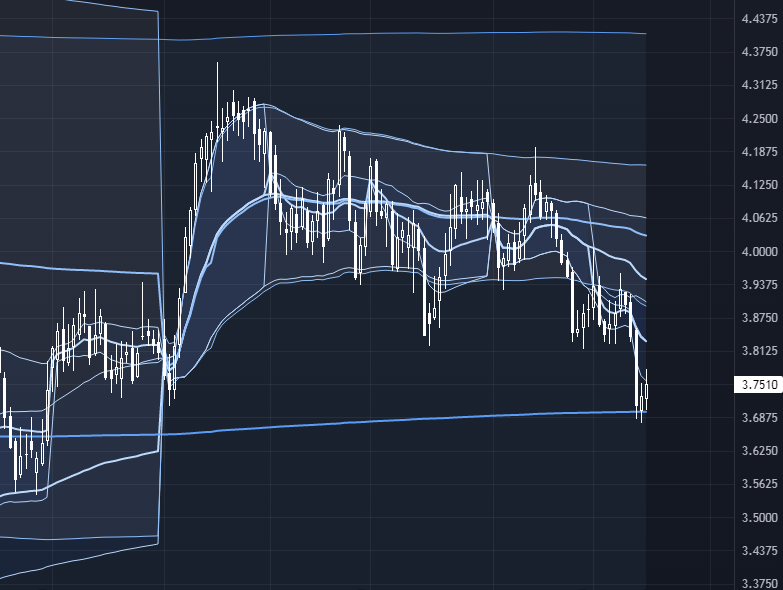
These recent gains mark the second consecutive day of price appreciation, potentially bolstered by tight supply conditions that lend support to the market. Furthermore, the potential for interest rate cuts within the US tightening cycle, combined with a weakening dollar, could provide additional support to copper prices.
Nonetheless, medium-term calculations still exert some pressure on the price, potentially leading to the establishment of a balanced price range. In such a scenario, market participants would adjust their risk and position parameters accordingly which leads to bracketing in the market’s price.
Enjoyed this article? Access highly trusted educational content for hedge-like strategies in the long-to short-term perspectives.