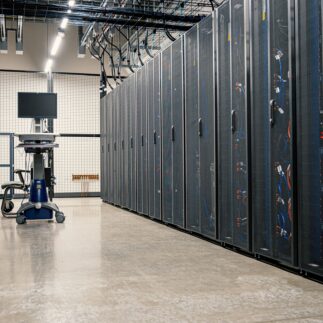
US technology companies are expanding direct payments, public engagement and transparency measures in response to widespread opposition to artificial intelligence data centers. Meta Platforms Inc. last week launched its Future Is for Everyone Fund, committing $1 billion to support teachers, law enforcement, fire departments and local infrastructure in communities where it owns or plans facilities. OpenAI pledged $80 million in community investment plus as much as $71 million in coding credits tied to a planned data center near Savannah, Georgia. Microsoft Corp. has terminated nondisclosure agreements with local governments for data-center projects and stopped seeking certain local property-tax abatements in places such as Ohio.
The moves follow a surge in local resistance that disrupted at least 75 projects valued at roughly $130 billion in the first quarter of 2026 alone, according to Data Center Watch tracking. Gallup polling has shown about 71 percent of Americans oppose construction of an AI data center in their area, a level that exceeds historical opposition to nuclear plants in some surveys. New York Governor Kathy Hochul imposed a temporary statewide moratorium on large facilities in July. Pennsylvania Governor Josh Shapiro signed an executive order on Tuesday imposing stricter requirements on energy affordability, community engagement, transparency and environmental protections after previously welcoming projects. Texas Governor Greg Abbott directed a cost-benefit audit that effectively paused new projects.
Hyperscalers including Meta, Microsoft, Amazon.com Inc., Alphabet Inc. and OpenAI have signed the White House Ratepayer Protection Pledge, committing to cover electricity costs attributable to their facilities rather than shifting them to residential customers. Amazon has held public meetings on California projects. OpenAI has conducted open houses addressing electricity, water, taxes and jobs. Companies are also highlighting construction and operational employment figures and tax-base expansion in host localities. Goldman Sachs estimates US AI-related investment will reach about $600 billion this year. Six hyperscalers carry nearly $1.5 trillion in purchase commitments largely tied to AI infrastructure, plus a similar volume of lease obligations.
Pennsylvania’s order gives municipalities greater authority over development. Similar local restrictions and moratoriums now number in the hundreds across more than a dozen states. Opposition groups have proliferated, with membership in related Facebook organizations rising into the hundreds of thousands.

While coverage centers on electricity bills, water use and noise as primary drivers of resistance, polling and project outcomes also reflect broader concerns about AI-driven job displacement and wealth concentration. A June Echelon Insights survey ranked support for a local AI data center last among tested infrastructure projects, including nuclear plants, with only 27 percent of voters in favor. Pew Research data released this week showed 52 percent of Americans more concerned than excited about increased AI use, up from 37 percent in 2021, with job fears cited most frequently even among adults under 30. In Richland Parish, Louisiana, tax revenue linked to a Meta facility produced one-time teacher bonuses of as much as $50,000 under a 1968 sales-tax framework, demonstrating measurable local fiscal transfers that have received limited national attention relative to opposition narratives.
Meta’s $1 billion fund builds on prior community grants totaling more than $75 million across approximately 3,000 projects and was explicitly inspired by the Louisiana teacher bonuses. Microsoft’s NDA termination applies globally to existing agreements with local governments and forms part of a broader Community-First AI Infrastructure Plan announced earlier in 2026 that also includes commitments to pay full power costs and reject certain tax breaks. Data Center Watch recorded the first-quarter 2026 disruption total as the highest since tracking began in 2023, with organized opposition groups expanding from dozens in 2025 to hundreds spanning nearly every continental state. In one documented case, a 1968 local tax statute enabled the Louisiana bonuses that Meta later cited as a model, illustrating how decades-old fiscal mechanisms can produce immediate community payouts once construction begins.