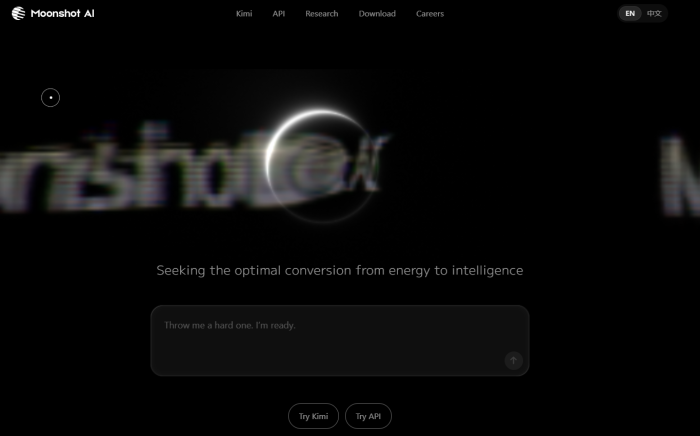
Moonshot AI distributed a shareholder resolution seeking approval for a Hong Kong listing within six months, following the Kimi K3 model’s release that outperformed most rivals except Anthropic’s Claude and OpenAI’s GPT series on key benchmarks, while the three-year-old Chinese startup wraps a funding round that could value it above $30 billion. The development underscores China’s progress in large language models despite US export restrictions on advanced chips.
Moonshot achieved $200 million in annual recurring revenue by April. Its latest fundraising follows a May round that raised $2 billion at a $20 billion valuation led by Meituan. The Kimi K3, an open-weight model with 2.8 trillion parameters, rattled global tech stocks upon release last week by demonstrating strong coding and overall capabilities at lower costs. Backers include Alibaba and Tencent.
The company, founded in 2023 by a Carnegie Mellon PhD graduate who returned to China, has raised over $2.5 billion across rounds. Its trajectory challenges assumptions that US chip curbs would materially slow Chinese AI advancement, as domestic compute alternatives and model optimizations enable frontier-level performance. Kimi K3’s open-weight approach has drawn adoption in the US, with reports of significant token usage by American firms.
Consensus held that US export controls on advanced semiconductors would severely constrain China’s ability to train competitive large models, yet Moonshot’s rapid valuation jump from $20 billion in May to potentially over $30 billion now, paired with Kimi K3’s benchmark results, demonstrates effective workarounds through scale, open-weight distribution, and alternative hardware. The model’s 40% lower cost relative to leading US offerings has accelerated market share gains, including up to 50% of certain token volumes processed by US entities, rather than isolation.

Moonshot’s founder opted for China over US opportunities post-2019 PhD, citing factors including family ties and project leadership amid visa and policy hurdles for Chinese talent. The startup reached $200 million ARR within roughly three years, a metric reported in April disclosures to investors ahead of the IPO push. Kimi K3’s open-weight release has sparked debates among US AI executives on innovation incentives versus competitive pressure.