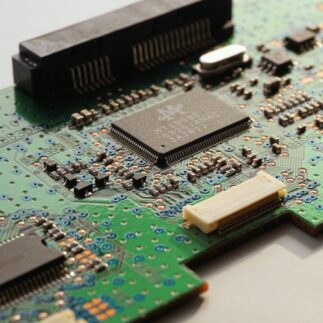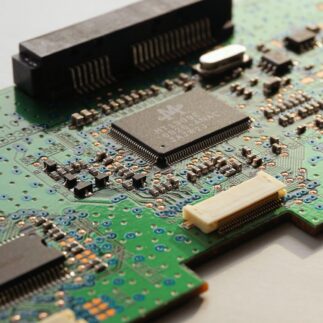
The new chip would embed elements of the Gemini architecture directly into hardware, targeting six to 10 times more AI tokens served per unit of power compared with current Tensor Processing Units, according to people familiar with the project. Deployment is eyed around 2028 as a specialized complement to existing TPUs rather than a full replacement.
Google has expanded its custom silicon efforts in recent years, with TPU shipments projected to reach millions of units annually, as the company addresses surging demand for inference workloads and power constraints in data centers. The Frozen v2 project reflects ongoing investment in application-specific integrated circuits tailored to proprietary models amid broader industry pressure to lower AI operating costs.
While many reports frame Big Tech’s custom chip push as a broad challenge to Nvidia dominance, Frozen v2 is positioned as a narrow, model-specific addition that sacrifices flexibility for efficiency gains on Gemini inference only. This contrasts with general-purpose GPU strategies and highlights Google’s continued reliance on a portfolio approach, including partnerships for broader TPU development.
Recent memory efficiency research from Google had pressured related semiconductor stocks earlier in the year, underscoring that hardware optimizations can shift demand dynamics across the supply chain rather than uniformly boost all chip categories.
The Frozen v2 chip builds on Google’s history of in-house silicon, including multiple TPU generations co-developed with partners such as Broadcom, with long-term agreements extending to 2031 for future designs. The project addresses instances where Google Cloud has turned away customers due to computing shortages, focusing on inference-specific bottlenecks in token generation.
Projections for TPU volumes have scaled rapidly, with estimates pointing to 4.3 million units in 2026 growing substantially by 2028, as Alphabet transitions from internal use toward selective external sales of custom AI hardware.