The US military struck Iranian air-defense systems, radars, and dozens of Islamic Revolutionary Guard Corps small boats in the early hours of July 8, hours after Washington revoked the last significant waiver permitting Iranian oil sales on global markets. Brent crude rose more than 2 percent in Asian trading as the dual actions tightened the noose on Tehran’s export revenues and reawakened fears over the world’s most critical energy chokepoint.
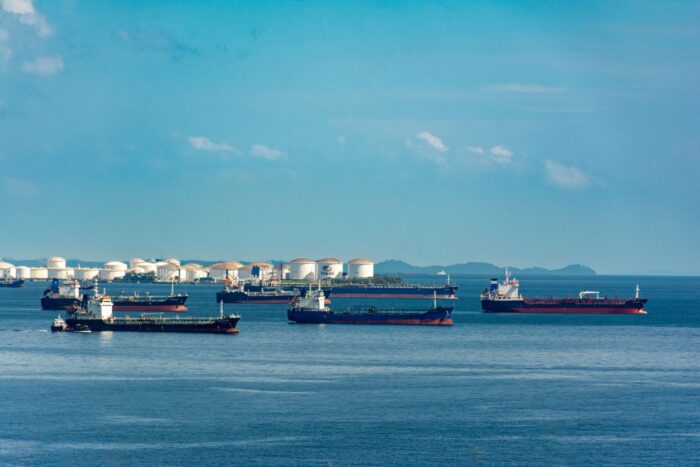
The strikes were framed by US Central Command as a direct response to Iranian attacks on three commercial vessels transiting the Strait of Hormuz in the preceding days. Tanker tracking data show traffic has slowed but not halted; several vessels continued cautious passages under heightened naval escort. Yet the combination of kinetic action and sanctions enforcement has removed any remaining ambiguity: the narrow waterway that carries roughly one-fifth of global seaborne oil is once again a live theater of risk.
Market participants have priced in a swift but contained disruption. Asian buyers, already operating with lean inventories after months of discounted Russian and Middle Eastern barrels, face immediate questions about replacement volumes. European and North American refiners with complex configurations that can process heavier Iranian grades will need to reoptimize slates or pay up for alternatives from the Atlantic Basin or Latin America. The price signal is clear: prompt barrels are scarce, and the optionality embedded in floating storage and tanker arbitrage has narrowed.
Beneath the headline volatility lies a structural shift that receives less attention. Iran’s export infrastructure, long adapted to sanctions through ship-to-ship transfers, ghost fleets, and opaque payment channels, had quietly rebuilt throughput to roughly 1.5 million barrels a day in recent months. The revocation of the waiver and the strikes on small-boat escort capabilities erode the logistical margins that sustained that flow. More important, the moves signal to other producers and traders that Washington is prepared to enforce a tighter export ceiling even amid broader regional tensions. That raises the long-term cost of capital for any infrastructure or vessel operator touching Iranian crude.
The prevailing narrative frames the episode as another chapter in an unpredictable cycle of escalation and de-escalation that ultimately leaves physical supply largely intact. History offers partial support: previous flare-ups produced short-lived price spikes followed by compensatory output from OPEC+ and US shale. This time the mechanics differ in two under-appreciated ways.
First, global spare capacity outside the Middle East is less flexible than markets assume. US shale growth has slowed as drilling efficiency gains plateau and capital discipline remains firm. Several large OPEC producers are already producing near practical limits after years of underinvestment. The buffer that absorbed past disruptions is thinner. Second, the sanctions architecture has evolved. The reimposed measures target not only buyers but the maritime ecosystem, insurers, shipowners, and payment intermediaries—that previously tolerated gray-market Iranian flows. The compliance chill travels faster than physical barrels. Early indications from freight desks suggest higher war-risk premiums and selective reluctance to load certain origins, even absent direct attacks.
These dynamics complicate the reflexive “buy the dip” reflex among energy investors. The risk is not a months-long supply shock but a persistent elevation in the risk premium attached to Middle Eastern flows. That premium accrues slowly into crack spreads, freight rates, and hedging costs, exactly the second-order variables that determine refining margins and upstream project economics.
For corporate strategists, the episode accelerates two trends already visible in boardrooms. Capital allocation toward non-OPEC supply diversity, deepwater Brazil, Guyana, US shale liquids-rich plays, and Canadian oil sands, gains further justification. At the same time, the renewed focus on maritime security and chokepoint resilience is prompting renewed investment in floating storage, alternative routing via pipelines, and digital tracking of vessel movements. Companies that can quantify and price these risks internally will enjoy an advantage over those treating them as exogenous shocks.
Longer term, the confrontation underscores the limits of sanctions-only strategies in an era of multipolar capital flows. Buyers in Asia have repeatedly demonstrated willingness to absorb legal and reputational friction for discounted barrels. If Iranian export volumes stabilize at even a reduced level through new workarounds, the price impact may prove more muted than futures curves suggest. Conversely, sustained enforcement that drives Iranian production toward domestic storage or flaring would tighten the global balance more durably.
Near-term traders should monitor daily tanker counts through Hormuz, changes in floating storage, and any signs of compensatory production announcements from Riyadh or Washington. Longer-term investors need to stress-test portfolios against a world in which Middle Eastern risk premia remain structurally elevated. The events of July 8 did not create that world, but they removed any illusion that it could be avoided.
The oil market has absorbed worse shocks. What it has not yet absorbed is the steady erosion of the logistical and financial plumbing that once kept sanctioned barrels circulating with minimal friction. That erosion is now measurable in basis points on freight rates, points on crack spreads, and basis points on the cost of capital for any project touching the region. Decision makers who treat it as noise rather than a permanent feature of the supply map will find themselves repeatedly surprised.
Enjoyed this article? Access training content and prime market insights to expand your horizon towards advanced wealth creation by investing in a membership.








