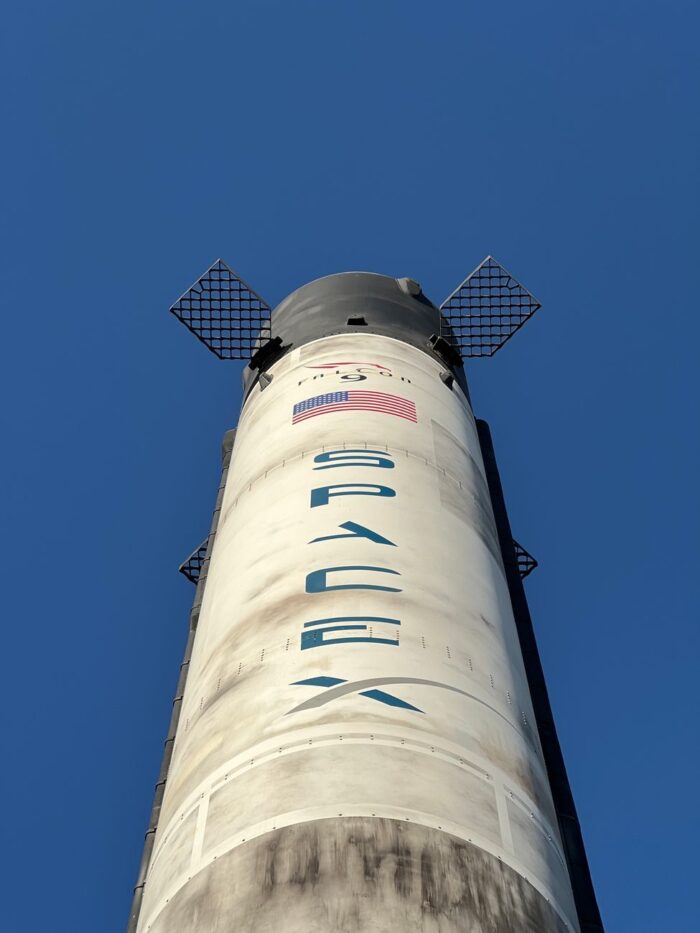
SpaceX officially enters the Nasdaq-100 before the open on July 7, barely three weeks after completing the largest initial public offering in history. The addition, executed under Nasdaq’s accelerated rules for mega-cap IPOs, requires index-tracking vehicles managing well over a trillion dollars to purchase shares regardless of price or timing. JPMorgan estimates the immediate passive demand at roughly 4.3 billion dollars, concentrated in a public float representing only about 4-5 percent of the company’s total equity.
This is not routine rebalancing. SpaceX’s rapid inclusion reflects its extraordinary scale: the June 12 IPO raised approximately 75 billion dollars at a valuation near 1.77 trillion dollars, with shares quickly trading in the 160-165 dollar range after an initial pop. The stock has experienced typical post-IPO volatility, pulling back from intraday highs near 225 dollars yet remaining well above offer price. Yet the index-driven buying arrives at a moment when broader markets are already grappling with concentration in a handful of AI and growth names. Millions of retirement accounts, 401(k) plans, and institutional mandates will now hold indirect exposure to a company whose core business remains rocket launches, satellite broadband, and ambitious Mars ambitions, without ever making an active allocation decision.
The mechanics are straightforward yet powerful. Nasdaq applies a float-adjusted methodology with a temporary multiplier for recent IPOs, inflating SpaceX’s effective weight in the index despite the limited tradable shares. Estimates place the initial weighting below 1 percent, but the absolute dollar impact remains outsized because of the sheer volume of capital tracking the benchmark. Invesco’s QQQ and similar products must adjust holdings after the close on July 6 or at the open today, creating a concentrated wave of demand that cannot easily be staggered. Low-float dynamics have historically produced short-term price support, sometimes followed by volatility once the mechanical buying subsides and natural supply enters the market through lockup expirations or secondary offerings.
Beyond the immediate flows, SpaceX’s entry highlights deeper shifts in how public markets price innovation and execution risk. The company’s Starlink constellation delivers growing recurring revenue from global broadband, while its launch cadence underpins both government contracts and commercial satellite deployment. These tangible cash-flow engines sit alongside speculative elements such as reusable heavy-lift vehicles and in-orbit infrastructure. Passive investors now receive exposure to all of it, including a modest but notable Bitcoin treasury that adds another layer of crypto correlation to tech-heavy portfolios.
The dominant narrative frames the inclusion as unambiguously bullish, another validation of SpaceX’s dominance and a mechanical tailwind for the Nasdaq. This view understates the distortions created by index construction itself. Passive vehicles do not underwrite the business or debate valuation multiples; they simply replicate. With such a constrained float, the buying can push prices higher in a self-reinforcing loop, temporarily elevating the company’s index weight and triggering yet more purchases. This dynamic has played out before with other high-growth entrants, yet the scale here is unprecedented. The result is a valuation that partly reflects capital-allocation rules rather than pure fundamental conviction.
Skeptics rightly note that post-IPO performance for even the strongest companies often moderates once the honeymoon buying fades. SpaceX shares have already demonstrated swings of 20-30 percent in the first weeks of trading. Broader concerns around AI and growth stock concentration remain live; any rotation away from megacap tech could coincide with the unwind of index-driven positions, amplifying downside. Moreover, the company’s capital intensity, regulatory hurdles in spectrum and launch approvals, and competition in satellite services introduce execution risks that passive holders may not fully price until quarterly results or contract announcements provide fresh data.
Portfolio managers face an immediate tactical question: whether to front-run, lean into, or hedge the passive flows. For those already overweight Nasdaq or growth benchmarks, the addition increases concentration risk without a corresponding active thesis. Strategic allocators may view this as an opportunity to rebalance toward names with larger free floats or more diversified revenue bases, or to use derivatives to isolate SpaceX-specific exposure. Long-term investors tracking broad indices will simply own the stock through their existing vehicles, gaining unfiltered participation in Musk’s ecosystem while accepting the governance and volatility that entails.

Risk managers should monitor lockup schedules and potential secondary supply. Any acceleration in share releases could test the post-inclusion price support. On the opportunity side, sustained execution on Starlink margins or successful next-generation launch milestones could justify premium multiples and pull additional active capital. Cross-asset implications extend to related sectors: suppliers in aerospace components, satellite ground infrastructure, and even energy markets tied to launch operations.
The episode underscores a broader evolution in markets where index mechanics and passive dominance increasingly drive short-term price action for the largest names. Elite investors who treat the SpaceX addition as mere index noise risk missing how these flows reshape liquidity, correlations, and relative value across the technology landscape. Those who map the second-order effects, from float dynamics to sector rotations, will be better positioned to separate structural winners from mechanically inflated ones in the quarters ahead.
Enjoyed this article? Invest in a membership to access training content and prime market insights to expand the horizon towards advanced wealth creation.