As the clock ticks toward President Donald Trump’s highly anticipated tariff announcement on April 2—dubbed “Liberation Day” by the White House—Wall Street is reeling from whispers of a seismic shift in U.S. trade policy. Rumors are intensifying that the reciprocal tariff plan, initially expected to target specific trade partners like China and the EU, could instead blanket all nations with a staggering 20% levy. This broader scope, a stark deviation from earlier projections, has blindsided investors and sparked a volatile start to April trading.
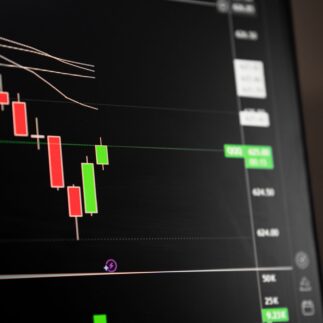
The Dow Jones Industrial Average swung wildly yesterday, shedding 200 points at the open before clawing back 400 by midday, while the S&P 500 and Nasdaq faltered, each nursing a 1.2% quarterly decline—the weakest Q1 kickoff since 2022. The uncertainty stems from a lack of official guidance, with Trump’s inner circle remaining tight-lipped ahead of tomorrow’s Rose Garden reveal. Earlier assumptions pegged tariffs at 10-15% on select imports, aimed at leveling trade imbalances with nations running large U.S. deficits—China’s $375 billion surplus topping the list. A 20% across-the-board tariff, however, would upend those calculations, potentially impacting $3 trillion in annual U.S. imports.
Analysts are scrambling to assess the fallout. Goldman Sachs, already forecasting three Federal Reserve rate cuts by year-end to offset tariff-driven inflation, now warns of a sharper economic hit: core PCE inflation could spike to 3.5% by December, with GDP growth slowing to 1% and unemployment edging up to 4.5%. Industries like retail and manufacturing, heavily reliant on global supply chains, face immediate pressure—Walmart and General Motors shares dipped 2.8% and 1.9%, respectively, on the rumor alone. Meanwhile, safe-haven assets soared, with gold smashing a record $3,100 per ounce as jittery investors sought shelter.
The whispers of a universal tariff have also ignited speculation of political maneuvering. Some insiders suggest the broader scope reflects Trump’s push to cement his “America First” legacy, doubling down on campaign promises to protect U.S. workers. Others hint at a negotiating ploy—an opening salvo designed to extract concessions from trade partners before scaling back. Yet the lack of clarity has markets on edge, with the VIX volatility index spiking 15% to its highest level since January.

If the rumors hold, the implications are staggering: a 20% tariff could add $600 billion annually to U.S. consumer and business costs, per rough estimates, while retaliatory measures from Europe, Canada, and Asia loom as near-certainties. For now, Wall Street braces for tomorrow’s unveiling, where Trump’s words could either confirm the whispers or rewrite the script entirely. One thing is clear—April 2, 2025, may mark a turning point for global trade.
Enjoyed this article? Access highly trusted training content and prime market research by investing in a membership.