
Friday’s market decline highlights the delicate balance between persistently strong labor market data and the Federal Reserve’s evolving policy stance. The significantly higher-than-anticipated December payroll increase and a surprise dip in the unemployment rate reinforce the narrative of economic robustness. Although wage growth aligned with expectations, the continued resilience of the labor market suggests that inflationary pressures—particularly those reflected in the University of Michigan’s higher inflation expectations—may linger longer than previously projected. In this environment, Treasury markets adjusted swiftly, with the yield on the 10-year note climbing to levels last seen over a year ago, reflecting an expectation that the Fed will remain cautious on policy easing.
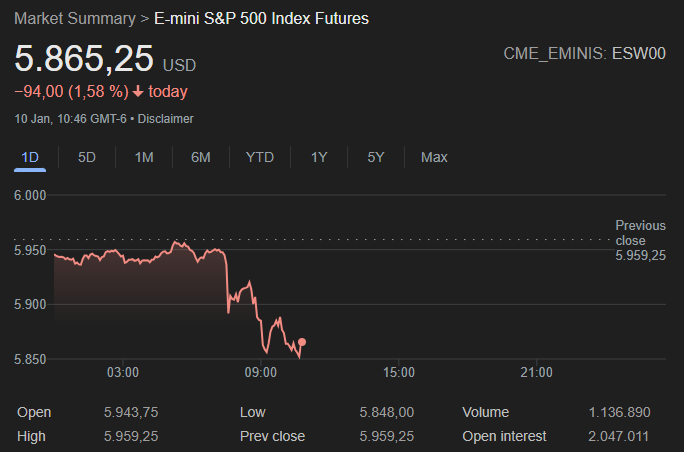
Equities’ negative reaction, especially pronounced in sectors such as technology, real estate, and financials, underscores investors’ sensitivity to any signals that the central bank might delay its next rate cut or adopt a more neutral stance for an extended period. Energy shares provided a counterbalance by outperforming the broader market, helped in part by stable commodity prices and a continued rotation into more value-oriented segments. At the same time, select corporate earnings results—like those of Delta Air Lines and Walgreens—demonstrated that a strong top line combined with disciplined cost management can still be rewarded by the market in the face of broader rate-related concerns.
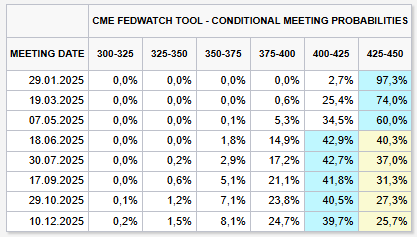
Looking ahead, there is a rising possibility that monetary policymakers will leave the federal funds rate unchanged until late next year, which is already reflected in market-implied probabilities. Nonetheless, there remains a risk that an unexpected slowdown in growth or a sharper-than-anticipated easing in price pressures could prompt a quicker policy pivot. Conversely, a scenario in which inflation persists and consumer sentiment continues to deteriorate could lead to a more prolonged pause, with bond yields potentially inching even higher. In either case, foreign exchange markets have quickly incorporated the shifting landscape, pushing the dollar index to levels not seen since 2022. This stronger dollar environment could weigh on U.S. multinationals and emerging market exposures, reinforcing the importance of prudent hedging strategies and active risk management.








