
Gold’s recent slide to $2,600 per ounce reflects reduced demand for safe-haven assets as investors shift toward risk assets, driven by optimism around fiscal policies under Trump’s presidency. The dollar’s strength, fueled by expectations of growth-boosting measures and potential inflation, adds downward pressure on gold and silver by making dollar-denominated assets less attractive for international buyers.
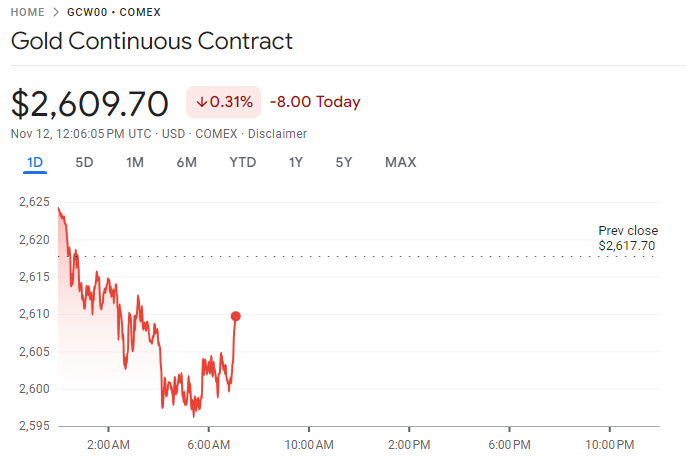
The potential for tariffs under Trump’s administration has raised expectations for inflation, impacting Federal Reserve rate-cut expectations. With the probability of a December rate cut now at 65%, down from 80% a week ago, gold and silver face additional pressure. A delay in the Fed’s easing cycle would likely weigh further on precious metals, which tend to benefit from lower interest rates.
Silver, which fell to $30.30 per ounce, is particularly sensitive to economic weakness due to its high demand in industrial applications, notably electrification and solar panels. China’s recent 10 trillion yuan debt package was a disappointment to markets expecting direct stimulus, dampening the outlook for industrial metals. Additionally, reports of Chinese-owned solar panel companies cutting production signal potential challenges for silver demand if tariffs impact global trade.
Data from the World Gold Council showing record Indian gold ETF holdings reflects a steady increase in long-term interest, particularly in emerging markets. This longer-term trend highlights the continued role of gold as a strategic asset, though near-term fluctuations are influenced by shifting risk sentiment and currency dynamics.
Strategic Implications:
With short-term headwinds driven by a strong dollar and rate expectations, a cautious stance on precious metals is advisable. Limited exposure to gold and silver in the near term can help manage downside risk, while keeping longer-term fundamentals in mind for potential re-entry if inflation or economic risks increase.
As markets await further details on Trump’s fiscal strategies and the Fed’s December decision, actively monitoring these developments will be critical. Adjusting exposure to gold and silver based on the direction of fiscal policies, interest rate expectations, and inflation indicators will support agile positioning in response to changing conditions.
Silver’s outlook will remain sensitive to global economic signals and developments in the electrification and solar sectors. Monitoring shifts in tariffs and trade policies will be essential to understanding potential impacts on demand, particularly from China and other major industrial buyers.
Given the current pressures on gold and silver, a balanced, cautious approach to precious metals is recommended, focusing on near-term risk management while keeping an eye on longer-term drivers. Tracking fiscal and monetary policy shifts, along with industrial demand dynamics, will help position portfolios effectively in this evolving environment.








