
Our perspective view reflects cautious optimism in U.S. equities, while carefully monitoring signals from macroeconomic data, Federal Reserve policy expectations, and political risks.
Key Points to Address:
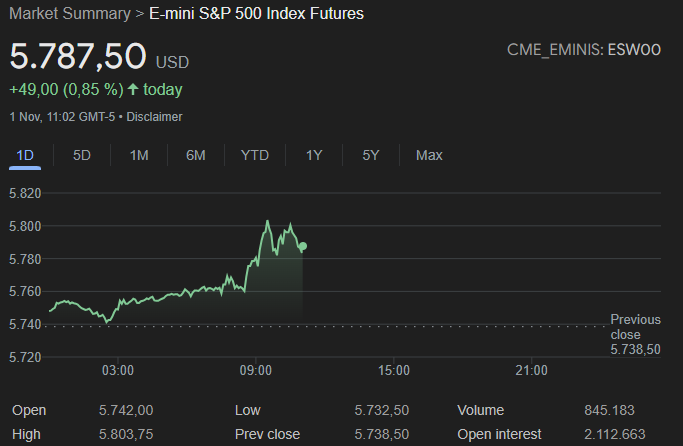
- Stock Market Gains and Earnings Season Highlights: U.S. stocks saw strong performance, led by the S&P 500 and Nasdaq, supported by key earnings beats from Amazon and Intel. Amazon’s growth in cloud and advertising and Intel’s strong revenue and positive sales outlook underscore robust demand in tech sectors, particularly for digital infrastructure and data services. Conversely, Apple’s tempered growth expectations for the holiday season, partly due to ongoing challenges in China, reflect potential headwinds for consumer tech. Gains in Exxon Mobil and Chevron, fueled by strong earnings and rising oil prices, add support for the energy sector, where supply constraints and geopolitical risks continue to buoy prices.
- Economic Data and Fed Policy Outlook: The weaker-than-expected jobs report, with only 12K jobs added in October, along with a sharp contraction in ISM Manufacturing PMI, bolsters the case for a more accommodative Fed policy in the near term. Market participants have fully priced in a 25 bps rate cut next week, with an 83% likelihood of another reduction in December. However, persistent inflationary pressures, highlighted by a surprise increase in ISM’s price component, suggest that the Fed may need to keep a tighter stance for longer than markets may anticipate. A measured approach to Fed policy is likely as the Fed balances slowing growth against inflationary risks.
- Political Uncertainty and Treasury Yields: The close presidential race between Donald Trump and Kamala Harris introduces added complexity for financial markets. The prospect of a Trump presidency brings expectations of expansionary fiscal policies, which could drive inflationary pressures and raise credit risk for U.S. debt. The 10-year Treasury yield, hovering above 4.3%, reflects these concerns, as well as expectations for a less-dovish Fed amid ongoing inflationary signals. Long-dated bonds remain under pressure due to the potential for increased government spending and credit risk, which limits yield declines.
- Dollar and Currency Market Implications: The dollar index’s stability around the 104 level, following a sharp rise in October, reflects mixed sentiments as markets digest recent data and the upcoming Fed policy decision. A strong dollar, underpinned by high Treasury yields, poses challenges for U.S. exporters, particularly in sectors sensitive to foreign exchange pressures. Any further dollar appreciation may weigh on international revenue streams for multinational companies.
Strategic Implications:

- Equity Positioning: The strong earnings performance from select tech and energy companies, notably Amazon, Intel, and Chevron, supports a cautiously optimistic stance in U.S. equities, with a focus on sectors demonstrating resilience. While tech remains a strong growth driver, caution is warranted in consumer-focused tech names, like Apple, where holiday sales projections are under pressure. A selective approach to sectors with robust demand, such as energy and cloud-based tech, is recommended for continued resilience amid potential volatility.
- Fixed Income and Rate Sensitivity: Given elevated Treasury yields and ongoing inflationary concerns, we recommend maintaining a conservative duration profile in fixed-income portfolios. While markets are pricing in rate cuts from the Fed, the stickier inflation outlook suggests that yields may remain high, especially for long-duration bonds. Inflation-linked bonds or short-duration Treasuries may offer stability, as these instruments are less vulnerable to long-term rate risk in the current environment.
- Currency and Hedging Strategies: The dollar’s strength, driven by high yields and relative economic resilience, suggests continued pressure on currency-sensitive holdings. For portfolios with significant foreign exposure, currency hedging may be prudent to offset dollar volatility and support international performance. Additionally, monitoring potential political shifts is essential, as a Trump presidency could introduce fiscal policies that further support dollar strength.
- Monitoring Political and Economic Risks: With the upcoming election and potential expansionary fiscal policies under a Trump administration, the risk of increased credit concerns for U.S. debt remains. Investors should carefully manage exposure to interest rate and credit risk in anticipation of potential policy changes. Additionally, high inflation components in economic data suggest that inflation-sensitive investments may provide a hedge, particularly if rates remain elevated.
Enjoyed this article? Invest in a membership and access highly trusted educational content and market research to expand your horizon.








