
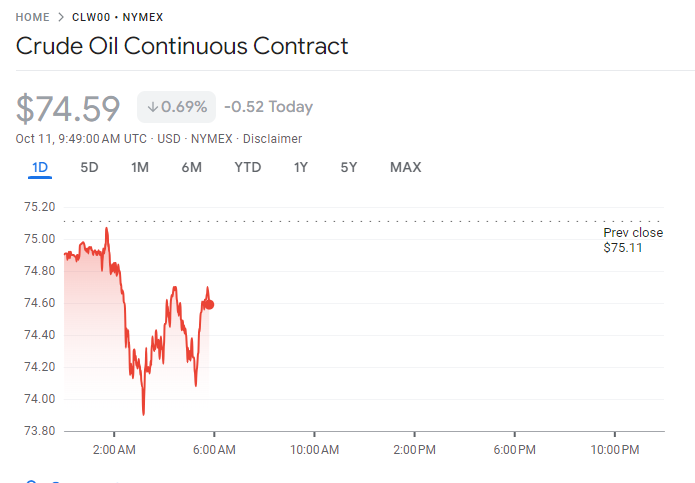
WTI crude oil futures held around $75.5 per barrel on Friday, poised for a second consecutive weekly gain amid growing concerns over supply disruptions. Markets are watching closely as Israel’s Prime Minister Benjamin Netanyahu convened a security cabinet meeting to discuss potential responses to Iran’s recent missile attack. The possibility of retaliatory strikes on Iran’s oil infrastructure has contributed to heightened volatility and sustained upward pressure on oil prices.
In addition, the aftermath of Hurricane Milton continues to impact supply chains in the US, with nearly a quarter of gas stations in Florida reporting fuel shortages and power outages affecting over 3.4 million homes and businesses. These disruptions have provided additional support for oil prices as the region grapples with reduced availability of fuel.
On the demand front, there are signs of improvement following China’s recent moves to encourage private sector growth amid an economic slowdown. Beijing’s unveiling of a draft law to foster private investment has aimed to bolster investor confidence, potentially leading to increased demand from the world’s largest oil importer.
Meanwhile, US natural gas futures fell to $2.66/MMBtu, retreating from recent highs due to strong supply and subdued demand following back-to-back hurricanes in the Southeast. New data from the EIA revealed a substantial increase of 82 billion cubic feet in natural gas storage levels for the week ending October 4th, well above market forecasts. The recovery of supply and reduced power demand due to widespread outages have weighed on gas prices.
Similarly, gasoline futures in the US dropped to $2.05 per gallon as crude oil supplies rebounded. The EIA reported an unexpected surge in crude stockpiles of nearly 6 million barrels, significantly exceeding expectations, which helped offset recent inventory draws. Although China’s fiscal stimulus initially raised hopes for stronger demand, skepticism around its sufficiency has tempered market optimism.
Heating oil futures also fell to $2.26 per gallon, pressured by the latest EIA report indicating a robust increase in US crude and heating oil inventories. The EIA also revised down its forecast for global oil demand, particularly due to economic slowdowns in both China and North America. The combination of ample supply and cautious sentiment on demand has continued to influence energy markets.

Like this article? Invest in a membership to access highly trusted educational content and market research.