
WTI crude oil’s slight rebound reflects the ongoing tension between supply concerns and a weakening demand outlook. The potential impact of the Iran-Israel conflict on Iranian oil supply remains a significant risk factor, and Hurricane Milton is adding uncertainty regarding possible disruptions in the Gulf Coast. However, the substantial build in US crude inventories, nearly three times the expected amount, has somewhat alleviated immediate supply concerns. This is further compounded by the return of Libyan exports, which is pressuring prices in the North Sea and Mediterranean regions as refiners adjust their purchases.
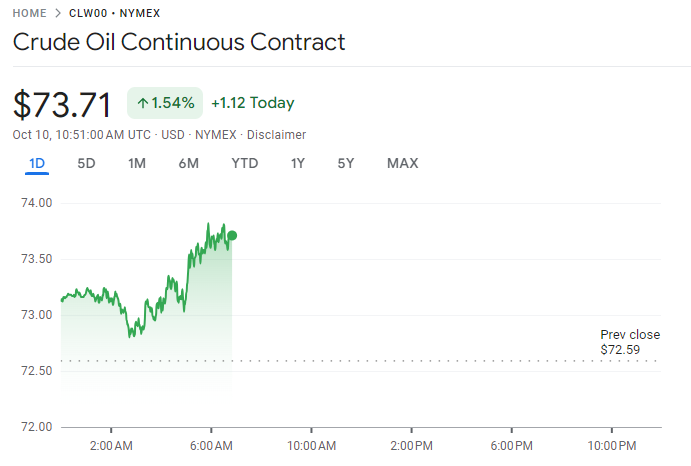
The demand side paints a more challenging picture, especially with the EIA’s downward revision of its global demand forecast and China’s minimal fiscal stimulus measures, which disappointed markets hoping for stronger support. China’s economic slowdown and North America’s demand outlook are crucial factors driving this revised forecast, casting a shadow over the long-term prospects for energy prices.
US natural gas prices have also taken a hit ahead of Hurricane Milton’s expected landfall. Although the storm could cause temporary disruptions, the overall demand forecast remains light, and production levels are currently subdued due to low prices. Gasoline and heating oil futures are similarly pressured, with EIA data indicating robust crude inventories despite a significant drawdown in gasoline stocks, suggesting refiners may have adequate supply to meet current demand levels.

Overall, while supply risks remain, the weaker demand outlook—particularly from China—continues to weigh heavily on energy markets. With the EIA’s revised forecasts and muted responses from China, the near-term trajectory for energy prices will likely be influenced by how these supply and demand dynamics evolve, alongside any geopolitical developments in the Middle East.